寡黙な死骸みだらな弔い (小川洋子 Book club) Currently Week 7

Another (sort of) similarity between the 2 stories is that both involve going into a dark (and scary) place, i.e. the fridge and the warehouse. It says here that Ogawa was a big fan of Anne Frank and tried creeping into small dark places to write.

I also wondered whether another reason for inviting the boy was that he didn’t challenge her re the violin (or squeal on her)?

All 3 (main) characters in this story only have very tenuous connections with each other despite there maybe being opportunities for something more than that, and the main connection in the first story (mother-son) is destroyed (as is that of wife-husband), and again assuming what we think is right re the weeping shop girl that is again the same very tenuous connection.

I haven’t read any Ogawa before but I am kind of expecting to see this again now.

1 Like

I just re-read the parts of story 1 about the weeping girl, and having read 果汁 it seems that there are really a lot of clues in story 1 that this is the same girl. E.g. right age, long fingers, the way she narrows her shoulders, etc, etc .

This also makes me wonder how Ogawa goes about writing a book like this. How much is worked out at the start and how much evolves along the way?

果汁

The links between the individual stories was one of the main things I remembered from this book from before, and one of the points I was most looking forward to puzzling out again, so the connection to the crying girl in the sweets shop jumped out immediately. I don’t remember specifics of all the connections, just that they exist. I liked being reminded of 妊娠カレンダー with the uncontrollable consumption (of fruit/fruit adjacent) in response to suppressed hunger, emotion, desire. And typist mention.

The time skip at the end of this story make me want to make a timeline for all the stories. The link to the former story was about… 6-7 years after the events of this story (what year in high school were they when this story took place?), but the ending states that the writer (the boy in the story) is telling this story 20 years afterward. We didn’t really learn anything about him in the story, aside from how he acted that day and the fact that he didn’t end up visiting her mother in the hospital or maintaining any kind of relationship with her after that day.

I have a few ideas as to why she would have wanted him to join her at this meeting, but the one I ultimately believe is that she didn’t want to get any closer to her father. Regardless of what the narrator said or did at this meeting, the simple fact that an outsider was present likely contributed to the fact that her father never touched on those heavier subjects like her mother (or his complete absence from her upbringing), or from plans for the future. He only names his relation to her once, at the end of the meal. It’s not just her father that she’s trying to keep at a distance, of course. It’s everyone around her, which I expect has something to do with the fact that her relationship with the narrator returns completely to how it was before this Sunday outing. It’s like she can’t trust anyone else in the entire world except for her mother, and she loses her mother she loses her only link to the world. What an incredibly lonely girl.

So, why the male narrator in this case? Though the story is told from his perspective, the story itself is completely about her. This could have been for any number of reasons, of course, but the reason I came up with that I’m partial to is that she will not let anyone else in. In the article @MysticWoodsTramp posted, it says that “[Ogawa] considers herself an eavesdropper on her characters. “I just peeked into their world and took notes from what they were doing,” she says.” And this character is so closed off that maybe that extends to her as the author as well? Where even she could only be an outsider peering in, and even then not far. If we never learn anything more about the narrator in other stories, I will probably stick to this theory. If we do, then I will reevaluate.

2 Likes

I love your idea about why she invited the boy - think that is spot on.

Your idea about why he is in the story at all is also very interesting - so I take it you mean he is there as a kind of shield between the girl and the author, if I have understood correctly?

1 Like

Rather than a shield, if I were to rephrase it he’s maybe a flashlight or a magnifying glass that Ogawa is using to focus on what we can see about this girl from the outside, because no one (including the author) can see inside. Only very briefly with the kiwi do we see the girl come out of her locked room, and afterwards she retreats back inside immediately. This is all my image of the characters (and author), of course.

1 Like

Hi, @gen-shk, thank you for replying. I see better now what you mean. The boy is definitely noting observations very much from the outside. Maybe there was a bit more communication during their telephone call years later? It will be interesting to see if this kind of outside observer crops up again!

2 Likes

老婆 J

Reading

Week Start Date Chapter Page Count
Week 3 Mar 7 Chapter 3 15

Participants

Mark your participation status by voting in this poll.
(Please feel free to update your status whenever you like!)

  • I have finished this part
  • I am reading along
  • I’m still reading the book but I haven’t reached this part yet
  • I am no longer reading the book
0 voters
老婆J

There is some wonderful building of atmosphere in this story.
Unlike the second story, we can see the connection to the previous story immediately. It is clear that we are up on the hill behind the old post office, and at the source of the mysterious mountain of kiwis. (Though it takes a while to explain how the kiwis end up in the post office building).
The scene in the storm, with the strange figure in the dark orchard who is revealed to be the old woman with apparent uncanny strength and agility was eery and fascinating. (I love the end of that scene, with the narrators sweaty palms leaving marks on her manuscript).

There a few little connections to other pieces of Ogawa writing. There is a mention of 枇杷, which might be a coincidence, but took me back to a moment in 妊娠カレンダー. More obviously, we have the narrator who is a novelist, and whose apartment was previously occupied by a sculptor - obvious echoes of 密やかな結晶.

I had wondered if the 老婆 of the chapter was linked to a very odd phrase right at the end of the previous chapter. When describing the ravenous unearthly way in which the girl eats the kiwis, the narrator compares it to

病んだ老母が嘔吐するように食べた

I confess I still find both that simile and the connection (if there is one) to this story, mysterious.

There were a few passages where I found my self confused. The old woman and the narrator’s first conversation was quite odd - with the old woman seemingly ignoring the narrator’s proffered folk wisdom about pine needles. (I looked it up - apparently it is a real technique for deterring stray cats).
I was then confused when the old woman was overheard telling someone else about the pine needle story, but claiming that it was something that her grandmother had told her.
I was momentarily confused by the scene with the observed massage client. It all seemed strikingly, disconcertingly sexual, until I worked out what was going on.
I’m still a bit puzzled by the package with Japanese scallops. I thought that the narrator had given the old woman the parcel only just after it had been delivered. But then when it is opened, it has all gone off and the date on the package was two weeks earlier. Does this make any more sense to anyone else? [Perhaps this is a mystery that will end up explained in another chapter?]

And then there are the wonderful carrots…
We do get an explanation (of sorts) about the cause of the mutated carrots.
Do you think the missing hands will turn up? (Or did they end up in the narrator’s potato salad?

2 Likes

I looked here right after reading the chapter and the photo gave me a fright!

Re the scallops, I read that a few times but I think the narrator’s friend had sent them, and the narrator offered them to J-san before opening them. However, when the narrator then proceeded to open them, they were off and well out of date.

One thing I wondered here a few times, but is just my idea is whether there is some messing with time here, or whether J-san has that ability, e.g. so she can be younger/stronger when she wants to be, and whether that has somehow meant that some long dead but still warm carrots/body parts can be dug up. Or maybe she is actually dead and that’s why her hands are so cold, and her fingers feel like bones? Also I wonder whether the kiwi were keeping fresh for much longer than usual so they were all fresh in the previous story despite maybe only being harvested very slowly. With a very large time shift (probably too large), J-san could also be the girl from the previous chapters, hence the odd sentence in the previous chapter that @domjcw points out). I think that is probably not intended but they do both have slender fingers. I do wonder why there is so much going on re fingers/hands in these stories..?

I did also wonder whether the massage client might have been her (estranged) husband but probably he was dead earlier.

The images seemed very vivid in this story, and I definitely felt scared about the narrator’s massage. I don’t think the missing parts will turn up - I don’t like to think too much about that potato salad!

Later edit: I just realized a bit more about the scallops. I think J-san had taken them in as maybe the narrator was out when they were delivered. First I just thought the post was slow, but of course this is Japan, so maybe J-san held on to them for 2 weeks before taking them round, (and then appearing keen to have some). Maybe she just likes (the idea of) things rotting..?

2 Likes

I was struck just now by a comment that @domjcw made about the clocktower in story 1:

To me J-san kind of fits that image, but I don’t know if that is intentional? And writing this I notice that the clocktower measures time, and maybe that is a link to J-san possibly manipulating time?

It may also be that there are some things that are strong links like the crying girl and the kiwis, and other things that are more like motives as in say a piece of music where themes are introduced but fade away only to (perhaps) be picked up and expanded upon later?

BTW on a slightly separate topic, I had a bit of a rush to buy the book, but have just looked carefully at the cover, (which is the same as in the picture here), and I am pretty sure that the big fruit is a kiwi. But I hadn’t noticed the eye in it before. So I think @domjcw may well be right with this suggestion re story 2:

Finally, it seems very noticeable here again that we learn relatively little about the narrator, (not even their gender - but almost certainly female?), albeit probably a bit more than in 果汁, and (again) practically nothing about the husband. So male characters are like in story 1, not really getting their say here.

1 Like

眠りの精

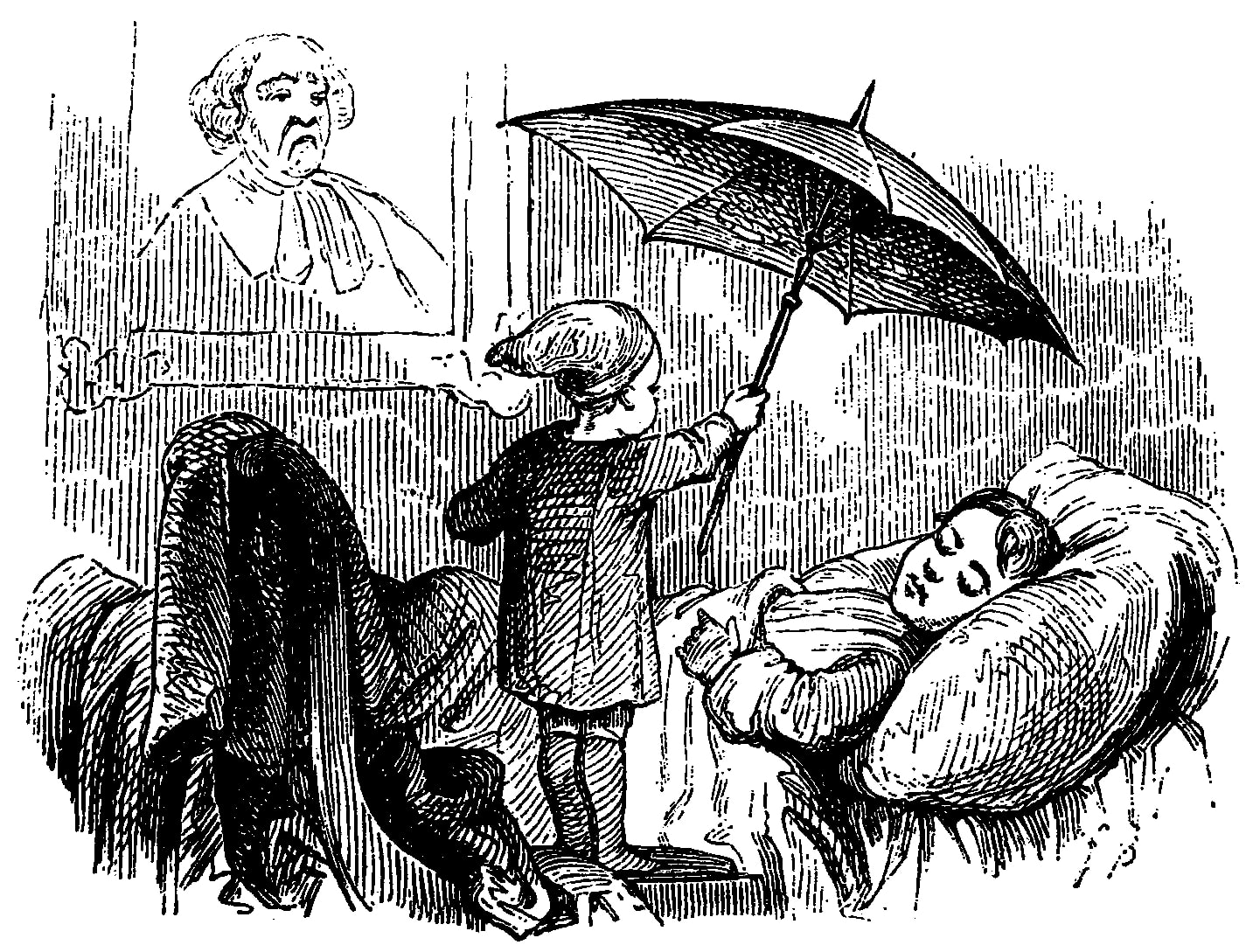
By Vilhelm Pedersen - Self-scanned, Public Domain, File:Vilhelm Pedersen, 0k-06, ubt.jpeg - Wikimedia Commons

Reading

Week Start Date Chapter Page Count
Week 4 Mar 14 Chapter 4 15

Participants

Mark your participation status by voting in this poll.
(Please feel free to update your status whenever you like!)

  • I have finished this part
  • I am reading along
  • I’m still reading the book but I haven’t reached this part yet
  • I am no longer reading the book
0 voters
眠りの精

I found this a quiet, slightly melancholy story. Apart from some intriguing links to the previous story, there was little or no sinister or strange touches.

I had a couple of reflections.

I’m struggling to keep track of the timing of the different stories (anyone else worked it all out?). Here is an attempt. This story is set (in the train), thirty years or so after the narrator’s [another fairly vaguely sketched male character] step-mother married his father. Call the broken down train time T(c4). We learn than she won a prize for her story about 5 or 6 years later, and she left the narrator’s father after 2 years.
It seems as though maybe chapter 3 is the story that she published. So the events of chapter 3 (which led to the photo) must be somewhere between 26 and 30 years before the broken-down train (T(c4)).
Chapter 3 must be before the events of chapter 2 (when they discover the mountain of kiwis). The crying woman from c2 occurs 20 years after that, so maybe 6 to 10 years before Tc4.
That puts the events of chapter 1 at the same time. (The death of the boy in the fridge was 12 years earlier - so 18-22 years before T(c4)?)

  • Broken down train [Tc4]
  • Crying bakery assistant [Tc4 minus 6-10]
  • Death of boy in fridge [Tc4 minus 18-22]
  • The mysterious carrots [Tc4 minus 26-30]
  • The meeting in the restaurant [a little before the carrots?]
  • Ten year old narrator from Tc4 meets the novelist, goes to zoo, listens to a story (doesn’t remember it) [Tc4 -28-30]

No guarantee that this is correct

There are two slightly unsettling deaths in this chapter. The narrator’s first mother died of sepsis soon after his birth. (For those who aren’t aware, and thought this was a bizarre event, pimples or boils in the so-called “danger triangle of the face” can indeed lead to death). Then we have the 孤独死 of the step-mother/novelist, including the description of her mental decline in the ten years prior to her death. I wonder if we will hear more about her fears of someone stealing her manuscripts?

One question for others to ponder. We have the suggestion in this chapter that the story of 老婆 J is the prize winning story by our mysterious novelist character. That might make us wonder if it was entirely imaginary. (In which case, is the 果汁 story which links to it also imaginary?). But our narrator at the end of the current story finds the newspaper photo that featured in the 老婆J story.
So, do you think that the novelist embellished the (real) story of the misshapen carrots - to include the (imaginary) murder of the gambling husband. Or were these events real, and retold by the novelist?

Lastly, I went down a little rabbit hole thinking about the title of this story and what it means.
Obviously 眠りの精 is the title of the Brahms song that the children sing in the broken down train. But does it have any more significance?
We might translate 眠りの精 as the Sleep Sprite, or Sleep Fairy, but the more usual name in English is the Sandman. This figure comes from European folklore. There is a famous Hans Christian Andersen story about the little Sandman, who comes and sprinkles sand into the eyes of children and (if they are good) gives them sweet dreams.

There is nobody in the world who knows so many stories as Ole-Luk-Oie, or who can relate them so nicely. In the evening, while the children are seated at the table or in their little chairs, he comes up the stairs very softly, for he walks in his socks, then he opens the doors without the slightest noise, and throws a small quantity of very fine dust in their eyes, just enough to prevent them from keeping them open, and so they do not see him. Then he creeps behind them, and blows softly upon their necks, till their heads begin to droop. But Ole-Luk-Oie does not wish to hurt them, for he is very fond of children, and only wants them to be quiet that he may relate to them pretty stories, and they never are quiet until they are in bed and asleep. As soon as they are asleep, Ole-Luk-Oie seats himself upon the bed. He is nicely dressed; his coat is made of silken fabric; it is impossible to say of what color, for it changes from green to red, and from red to blue as he turns from side to side. Under each arm he carries an umbrella; one of them, with pictures on the inside, he spreads over the good children, and then they dream the most beautiful stories the whole night. But the other umbrella has no pictures, and this he holds over the naughty children so that they sleep heavily, and wake in the morning without having dreams at all.

There is also a much much darker earlier German story by EA Hoffman, where the Sandman collects the eyes of children who will not go to sleep!
Brahms’ lullaby is apparently based on a German folk song that isn’t related to the Andersen story, but has a benevolent figure who sprinkles sand to help a child go to sleep.
(There is a fascinating and detailed analysis of ambivalence in Brahms’ version of the song and story: Standing on the Threshold: Ambiguity in Brahms’ “Sandmännchen” (The Little Sandman), Tessa Husted – Ward Prize Celebration of First-Year Writers: 2021 – 2022 )

Anyway, the thing I wondered was whether Ogawa is implying that our novelist is akin to the sandman. IN particular, there is that very striking passage where she reads aloud her story to the 10 year old narrator from chapter 4. He very stringently tries to maintain his posture of attentive listening, but ends up wanting her to stop - her voice is starting to break because of how long she has been talking, and he fears she is going to cry. Is she the 眠りの精?
[Here, and at the very end of the chapter, we have a link to crying that seems to run through all of the chapters so far. The crying bakery assistant (chapter 1), the not crying teenager eating kiwis - later crying on discussing her father’s death (chapter 2), the verge of tears expression in the newspaper photo (chapter 3), the story reading that seems like she may cry (chapter 4)]

1 Like

I think the events in chapter 3 are real; and I don’t think chapter 3 is the prize-winning story itself; but the narrator in chapter 4 thought the story was completely made-up, but realizes it isn’t when he finds the press clipping. The stepmother kept the clipping, and others about her prize possibly to remind herself of her part in that story… that terrible potato salad !

2 Likes

A few slightly random thoughts about this story.

The father is essentially absent, and the novelist-mother is the sandman. I think the sandman image might be because like the sandman, the novelist step-mum - although liking children/the boy - is somewhat detached, and both are mostly doing what they do to please themselves.

She doesn’t care much that the boy is too tired to listen to her stories (which are above his level). She takes him to the zoo, but really for her research. In contrast the boy really tries to please her, by staying awake, trying to pretend he enjoys the ice cream at the zoo. So the relationship is certainly asymmetric.

I wonder what people think the reason is for describing the zoo outing? Including the fact that most of the animals are indoors so they just read about them.

I probably agree with @Magyarapointe about the story re the carrots being real and probably just described by the novelist. We also don’t know whether the protagonist made it to the funeral, but it seems it doesn’t matter. The journey has served the purpose already.

By the way re timelines, I haven’t tried to figure it all out but I think the call to the girl in story 2 was 5 or 6 years after graduating so not 20 years after the kiwi incident, (albeit the story was supposed to be told 20 years after that).

1 Like

thanks
Yes, that sounds right. I got it wrong
Crying girl is 5 or 6 years after graduation
I can’t work out how old the characters are in chapter 2.
If they are close to graduation, then we have

  • C4 Broken down train [Tc4]
  • Narrator from C2 - (20 years after C2)
  • C1 Crying bakery assistant [Tc4 minus 20-24] (maybe 6 years after events in C2/C3)
  • C3 The mysterious carrots [Tc4 minus 26-30]
  • C2 The meeting in the restaurant, the kiwis [a little before the carrots?]
  • Ten year old narrator from Tc4 meets the novelist, goes to zoo, listens to a story (doesn’t remember it) [Tc4 -28-30]
  • Death of boy in fridge [Tc4 minus 32-36] (12 years before events in C1)

Maybe

1 Like

I guess the characters in Ch2 are about 15 or 16 years old, as the boy at least feels socially awkward, so probably not yet college/uni age?

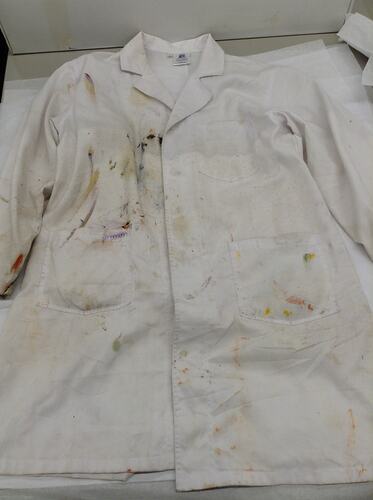
白衣

Image from

Reading

Week Start Date Chapter Page Count
Week 5 Mar 21 Chapter 5 13

Participants

Mark your participation status by voting in this poll.

(Please feel free to update your status whenever you like!)

  • I have finished this part
  • I am reading along
  • I’m still reading the book but I haven’t reached this part yet
  • I am no longer reading the book
0 voters
白衣

I’m not sure if it is a pattern, but my impression of the chapters so far is that they alternate between light and dark. The intense strangeness of the quiet bakery in the first chapter gave way to the school kids’ French restaurant assignation with the illegitimate father. The weird story of the carrots and the buried husband led on to the rather muted story of the train and the novelist stepmother.

So here were are in full macabre mode. We have a sense of disquiet as we learn that the medical secretaries must make a feared trip to the laundry room in the basement next to the morgue. But the real clue is the description of the 先輩

地下室で見る彼女の横顔は、死人のように美しい

We also have the disturbing comparison of the dried plum pit to a 干涸びた睾丸

And perhaps most disquieting, is the narrator’s fetish for watching her colleague lick airmail envelopes…

The writing here leads us to think that the macabre twist which seems to be approaching (and we are not deceived about that at least), will have something to do with the mortuary and to our narrator, with her somewhat unhealthy feelings towards her co-worker.

But no! The twist when it comes is that it is the older companion, the superlative secretary who has snapped in response to the behaviour of her lover. The discovery in the pocket of the philandering pulmonologist was definitely a surprise!

Incidentally, obviously the lover is supposed to have been on the train in the previous chapter.
(So that positions C5 just after the broken down train from C4). I don’t remember anyone who resembled a doctor in the characters on the train. Did I miss him?

So we have the delicious irony, that the lover may be stringing along the secretary, but we know that in the final episode of turning up late, he wasn’t actually lying… (at least not about the train).

PS there was a lot of tricky and technical vocabulary in this chapter!
I also got a bit confused (am still a little unsure) in the whole section about the neurologist’s slides. I couldn’t work out for a while who had done what. Was it the neurologist’s fault, the other secretary or the narrator?
It seemed as though the 先輩 has blamed the narrator for the mistake (though it was actually her fault for giving the wrong instruction) and made the narrator stay up all night. She then takes the credit?
I was a little puzzled partly because the narrator’s infatuation with the other secretary doesn’t seem at all diminished by this behaviour. (On my second reading of this chapter, I am not inclined to be very sympathetic to the murderous 先輩…)

1 Like

I hadn’t thought about that, but it really looks that way… I’m not sure what I should make of it, but having read the book years ago, I find I remember the grisly chapters best :downcast_face_with_sweat:

I must have been mis-remembering, but somehow that wasn’t the twist I was expecting. Or maybe my memory isn’t so bad, but since I don’t want to spoil future chapters for anyone, I thought the pulmonologist was also cheating with the 後輩, which somehow would explain her fascination with the older secretary : what does the pulmonologist see in the 後輩 if the 先輩 is so perfect ? Though clearly, her fascination is spooky.

I briefly reread the previous chapter and couldn’t find him either. Unless somehow he was with the children’s group ? But why ?

Yes, I think your explanation is right. This is just a stupid, but unfortunately very common power play by the 先輩 who is dating the up-and-coming 助教授 doctor. And not only dating, but having an affair with him, which, believe it or not, gives her a higher status… or so she thinks.

2 Likes

I probably need to read this again as this chapter seemed quite hard even ignoring the medical words. So I may not have understood everything.

I really hope that white coats are not really sorted out like this by medical secretaries!

As for the slides it seems the 先輩 gave the wrong instruction and effectively blamed the 後輩 (and said the 後輩 was slightly color blind), then claimed the credit (and the meal out) for fixing the mistake (which the 後輩 actually worked very late to fix).

I agree with @Magyarapointe that this was probably power play.

I agree with @domjcw that 死人のように美しい sticks out hugely, but I was not on the ball enough to realize this was a clue, just to think it odd. And also I think the reference to the train was obviously meant to refer to the train in the last chapter but I also don’t remember any mention of a doctor. I am not sure if the profession of the narrator was mentioned in that chapter but it doesn’t seem to fit him as he was on his way to his mother’s funeral, not to his wife, and presumably wouldn’t have had much time to narrate the events of chapter 4 if the events of chapter 5 are to be believed. Also maybe the narrator in chapter 4 is supposed to be working at the 出版社 where the (girl)friend who tells him about his mother’s death also works?

It does seem odd that the 後輩 is so obsessed with the 先輩 but maybe we will learn more about her later? Also I found it odd that the 後輩 (maybe correctly??) imagines the 助教授 using the endoscope on the 先輩. Is this intended to be symbolic? Or do both medical secretaries have too much anatomical knowledge/imagination?

I was taken by surprise by the ending, although I had read 私はもう待てなかったの several times and wondered about the tense used, but it was late in the story by then, so I really hadn’t twigged that things were heading that way. I had assumed the 先輩 would moan but just continue seeing the 助教授.

1 Like