Interesting to see that Tomoko’s mother is astonished about the same things as Tomoko when she first arrived. I wonder whether Tomoko can still relate to that or whether she already got used to everything so much that she doesn’t know about her initial astonishment any more…
Interesting matchbox story! We don’t disappear after our death, we remain in the stardust and everywhere. I guess the comfort that the girl in the story feels is shared by Mina…
Ch. 44
What a lovely wrap-up of the story. With a jump way into the future, we learn that Mina is doing well and thriving in Germany, the country of her ancestors (and was even able to discover grandma’s flat). Her parents are also still alive and on the verge of going to Germany to visit her. And they are apparently still together, so the flyer magic had a long-lasting effect on her father. Of course we also learn about the deaths of the two oldest household members, which was foreshadowed already.
Tomoko manages to visit the house again, but everything was different and so it felt like she didn’t have any connection to it any more.
What I found interesting that both found jobs revolving around books - Mina works at a book translator’s agency while Tomoko works in a library (so turtleneck guy worked some magic on her, it seems!). Tomoko also has family and children, but Mina seems to be on her own still?
What I cannot connect is the statement in one of the first chapters where Tomoko foreshadows at driving a train - or did I misread that one?
Thank you so much @domjcw for suggesting this book! It was a very wholesome read with so many 懐かしい vibes
It is interesting, Tomoko’s departure in the story seems to come upon us very suddenly - and of course she feels the same. あっという間に, her mother is there and she is down to the last days. I thought it was so sweet (and bittersweet) that the girls could not/would not say good bye, and constantly reassure each other of the proximity of Shizuoka (ironic in view of what happens in the next chapter)
Lovely moment when Tomoko tries to show off her 関西弁, acquired over the year, and ミーナ tells her she has it all wrong.
There was also something sudden in Mina’s giving up of the matchbox collecting. Pochiko has died, she is entering high school, and all of a sudden she is “putting away childish things”.
We have the very last matchbox story. I wondered whether the shooting star girl is in some way a representation of Mina. The morbid fascination (possibly triggered in Mina’s case by her repeated life-threatening illness), the special collection, maybe even the ‘revelation’ that she perceives at the end of the story.
A couple of questions.
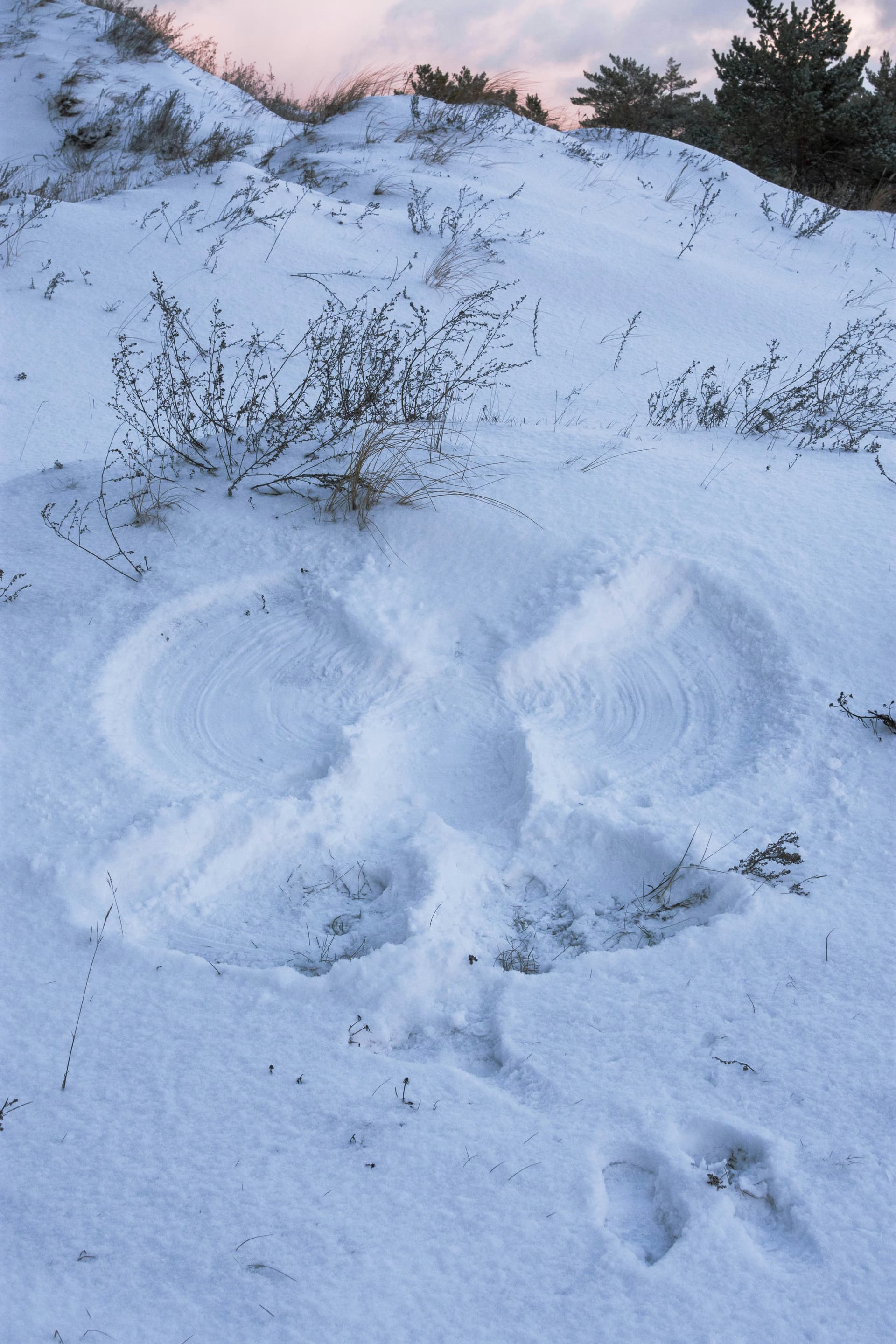
Why when they were lying in the snow (with a funny warm feeling on their backs) did they feel like they were riding on Pochiko?
I confess, I couldn’t quite follow what it was that led to the girl’s relief in the shooting star story.
She sees her self reflected in the tiny drop of dew-like star light in the glass. Somehow this leads her to the conclusion that we do not disappear when we die? We become like the discarded insect shell or fallen star?? I feel like I missed something
You are very welcome!! I’ve loved this story so much. So sweet and interesting and simple and deep at the same time.
I’ve got some more reflections on the final chapter and on the whole book to come…
And so we come to the end of the story.
If time flew past in the previous chapter, here we are whizzed through the remainder of Mina’s school days, past the death of 米田さん and ローザおばーさん and forwards in time to a point 30 years later.
Early in the chapter Tomoko makes a comment about how this time in her childhood is deeply etched in her mind - it becomes 私の記憶の支柱と呼んでもいい - the mainstay? of her memory
I think that I made a comment early on in the book about the importance of memory in this story, and here we have Tomoko reflecting on the importance of this ‘story’, the story that she tells herself about her time in Ashiya, for her memory.
Sometimes people find themselves fixated on a particular period of their past, either good or bad, in a way that changes, influences, casts a shadow over the rest of their life.
There is, of course, something special and (quasi) magical about the events in this book. It is interesting to hear that Tomoko has become a librarian - undoubtedly influenced by her time in Ashiya. [No mention here about Turtle-neck guy. If we found that she had ended up marrying him, I might be led back to some of my initial creepy worries about him. But I’m going to assume that didn’t happen, and she married someone unrelated to the Ashiya story! In the end Turtle-neck seemed to behave totally properly.]
Rosa’s sudden decline into benign senility was described as a kind of blessing - and there was something deeply touching about Tomoko drawing the twin moon 字 on Rosa’s palm - but faced with total lack of recognition. And then of course the collection of objects in Yoneda’s coffin - all quietly sad and moving.
We have in this chapter, the last part of Mina’s procession. Her march forwards through puberty into adulthood into 今で私の知らない遠い場所を行進している. When Tomoko recognises, a year after the events in the novel, that Mina’s hand no longer feels tiny and fragile - it contains within it a new strength. (I presume this is the adult Tomoko reflecting back. It seems like a very mature thing for a 14 year old Tomoko to notice).
I had a couple of questions.
Why does Tomoko call 叔父さん’s apartment 苦楽国?
I couldn’t quite picture the old house. At first, I thought that the house had been torn down and apartments built. Then it seemed like maybe the building was there, though changed. (I wondered if the dining room window had really shrunk or just compared with Tomoko’s memory). Is she wandering around the grounds? I kind of imagined that she was peeking over the wall, but couldn’t see how she would manage to see the flowers blooming under the ヤマモモ tree.
[Last little bit of rabbit holing. Sarubia is Salvia Splendens. It apparently originally comes from Brazil - not Liberia… サルビア - Wikipedia ]
@domjcw, thank you so much for choosing the book and running the club. I looked forward to joining ミーナ and 朋子 every week ! And while I’m a bit sad to have to say goodbye to them, this was actually the perfect pace to read this book.
yes, I think she was anxious to think we might disappear when we die, and the various transformations her experiments took were not reassuring; disappearing is bad, withering away or decaying is even worse. But yes, she can forever stay in the light of the shooting stars, so all is well.
Ah, yes, that was really funny !
That’s funny… I really liked this ending, even though we spent a long time in the book thinking ミーナ would die. It turned out a lot more optimistic than I though it might, but that was a fitting ending.
This comes from an autobiographical collection by the English novelist David Almond. I know of no direct connection between Almond and Ogawa. But maybe there are some common threads in their poetic style, the celebrating of the special child’s view of the world, and the mix of the everyday and the magical.
I’m afraid that in this part of the world it is distinctly cloudy and there isn’t a hint of a 流星 to be seen. but perhaps that is fitting for fans of ミーナの行進
Better late than never? I’ve loved reading this book! My edition had some pictures in it which I also enjoyed, did anyone else have these?
I was so glad Mina survived as someone who always gets a terrible cough whenever they’re sick, one trope I particularly hate is when characters have a cough and then die It is such a moving book though. Pochiko’s funeral really got to me and I loved the description of all the little episodes that made up Tomoko’s year in Ashiya. I liked that there wasn’t a grand denouement suddenly at the end - I was concerned that the fire was going to be a big dramatic end to the story for a minute! But Ogawa is much more subtle than that.
I feel like Japanese novels often give a very strong sense of the seasons - while it’s natural to help structure a novel that goes over a year, it does stand out to me and I really like it. Anyway, thanks to everyone for your thoughts, I’ve loved reading through the threads and making my own slow 行進 through the book!
The seasons are super important in Japanese culture (regarding food, events, weather, general mood, etc), and my Japanese friends are always very confused when we Europeans (comparatively) don’t care as much. So I guess for Japanese it’s quite normal to have this framing also in literature.
Definitely!
great that you enjoyed it as much as the rest of us!!
(It was interesting that when @nikoru and I joined a bookclub session (whose readers read it mostly in English), quite a few members of that group were quite disappointed by the book - perhaps expecting something more like The Memory Police or the Housekeeper and the Professor)
My sense is that the seasons are definitely very much part of 小川先生’s books - but as @nikoru says, that is pretty common in Japanese culture, so not necessarily distinctive.
Pochiko was such a wonderful character!! 懐かしい!
小川先生’s endings are often quite muted and anticlimactic. I’m nearly at the end of another of her books. Will see whether that one has the same feature!



 as someone who always gets a terrible cough whenever they’re sick, one trope I particularly hate is when characters have a cough and then die
  It is such a moving book though. Pochiko’s funeral really got to me
  and I loved the description of all the little episodes that made up Tomoko’s year in Ashiya. I liked that there wasn’t a grand denouement suddenly at the end - I was concerned that the fire was going to be a big dramatic end to the story for a minute! But Ogawa is much more subtle than that.