That’s quite a sweet thing for Sachiko to say, given that she has an education in dance and should have danced with many other people before.
I’m thinking back to their first encounter at the beginning of the book and the fact that Sachiko couldn’t remember the photo and why she declared Yumi her sour. Her explanation that she wasn’t quite awake seems hard to believe. I wonder if Sachiko knew of Yumi before that. Or if that was the first time she saw her and Yumi is just her type in appearance?
しかし、ステップの種類言われてOKと答えてしまえる男子高校生。この人、本当に十八歳なん だろうか。
I don’t understand this. Is it odd that he knows the name of the step? Or is “OK” something childish to say? Should he have said はい?
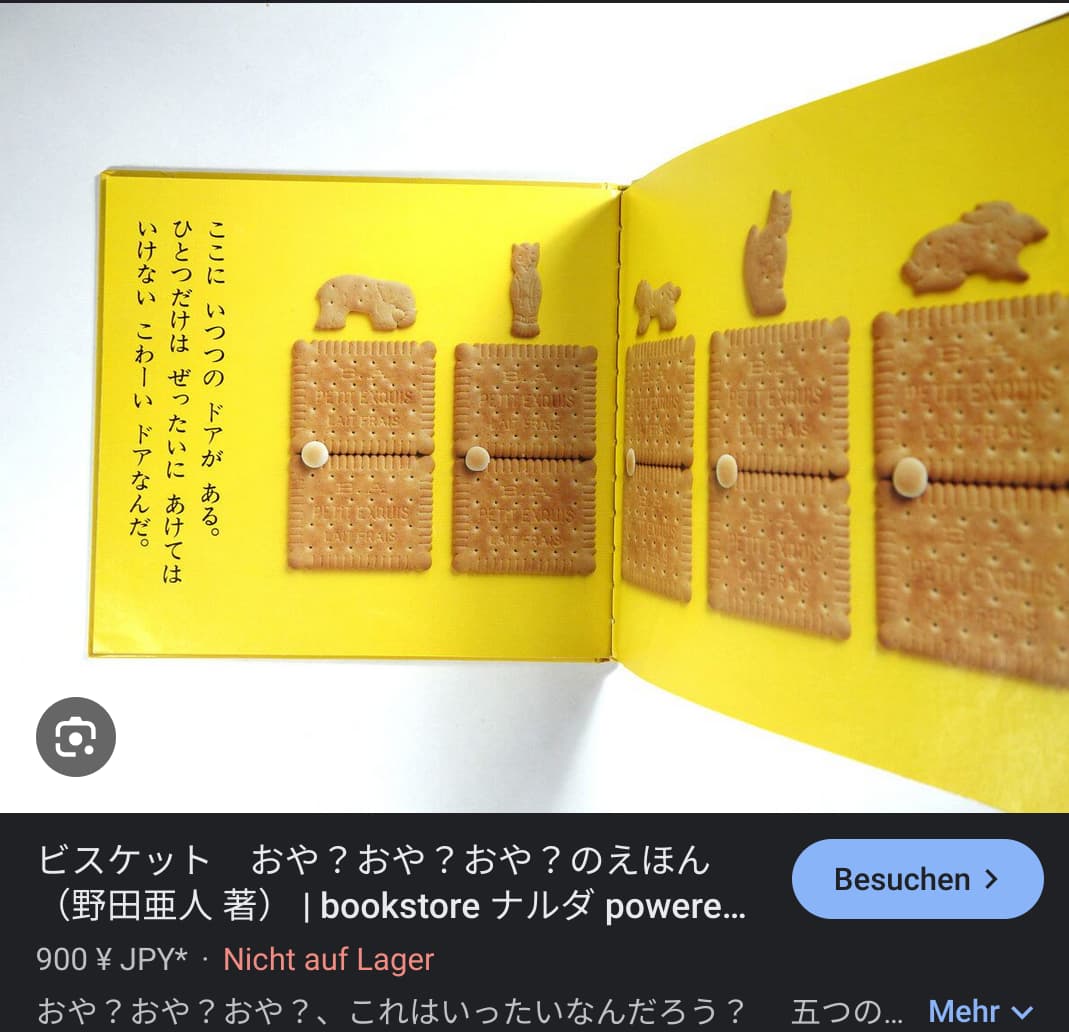
Ah yes, I didn’t know the word “panel” for this, but this is what I meant. Also visible in the screenshot that ルナ shared above. Without the anime I would have imagined a panel door with the cookies below each other and not have multiple columns in a row (for me this more looks like a “chocolate door” +laugh+)
She really does. It makes me want to hug her and tell her to have more confidence in herself. As an aside, I’ve always wondered why she has such a low self-esteem… Tho I expect the answer is “that’s just how the author made the character”
Any particular reason? It seemed plausible to me. Who isn’t tired and half-asleep at the beginning of the school day?
I think it’s probably the latter, but I also didn’t quite get it.
My other thought was since it was 種類のステップ that maybe she’s amazed he can just do whatever dance stuff is asked of him on demand, and doesn’t think most adolescent boys can do that… But the OK == immature thing seems more right
I imagine this will mostly be of interest after ppl have finished reading book 1, but for anyone who’s interested, I made a home thread for the broader franchise (including the companion series that follows Yumi’s brother). So feel free to ask or chime in w/ any post-book 1 stuff there, now or later
Believe me, I can relate to being sleep deprived in school. But it shouldn’t cause memory loss like that. And with sleep deprivation you’d be more likely to walk right past someone with a wardrobe imperfection rather than fix it.
This is the author using interesting similes again. But really, aldente seems a bit soft for a spine/backbone. Or maybe 芯 isn’t really the same as spine here.
自分のせいだなんて思いもしないの。うちの家系の男って、全部そう
Is Sachiko really only describing the men of her family? She seems a bit self centered herself…
I did keep reading this a bit faster because I was curious what is going on. But I didn’t like this chapter that much. It was all seemingly out of nowhere. And most important, it didn’t really have anything to do with Yumi.
And if I’m honest I didn’t really care for any discussion of Sachikos love life that doesn’t involve Yumi.
At this point, all I want is for Yumi to feel special.
I’ve finished the book. I think I’ll write some thoughts about the book as a whole later in the general franchise thread. So I’ll just write about the last chapter here.
Chapter 6
I liked this chapter when I read it. It was nice. But it was a bit lacking, and this I’m left with a but is a sense of 物足りない.
I really thought something interesting would happen at the play.
Or that there would be one last part, a few days later.
As it stands it was mostly just a epilogue to the story that ended in chapter 5. It was a nice epilogue. But a mere epilogue can’t really turn around the meh impression of the chapter before.
As for specifics notes:
I don’t particularly think he deserved it, but I thought it was funny that Sachiko stepped on his feed during the dance.
And this school seems to have the coolest clubs. An inventions club (発明部)? What do they do? And a mandolin group?
I agree that ch 6 was just an epilogue, and felt a bit 物足りない. But I feel like this entire book is maybe a bit of a prologue anyway.
Personally ch 5 is actually my favorite part of the book. I loved the section you disliked, bc it (potentially) opens the setting up more. For the first time, something outside the bubble of Lilian’s student council (and cliquey drama) is present, and impacting them - showing that maybe there’s a bit more to these students’ lives. Also I found the entire situation really interesting.
I do agree that Sachiko is often self-centered, but fwiw I don’t think she can be wholly summed up as such. Though we didn’t get to see other sides of her in this book. She’s not my favorite character, but she does have some self-awareness, and is not totally unconcerned for others either.
One of the things I didn’t like was that it came out of the blue for me and I felt deceived.
My impression was, that when Sachiko made a fuss on the first day, it was because the prince was a boy. I didn’t think she might know him, both because she didn’t want to share that information, and because the boys name wasn’t mentioned. It’s only looking back that it makes sense she would obviously not need the name and would know him from his position as Hanadera school president.
The part where she said she wanted to see him first before he sees her (on the day Suguru first came to the school) still doesn’t make sense to me with the new information.
And I assume the men in her family aren’t as bad as she makes them out, either. Or maybe they are, I don’t know.
My point wasn’t that I hate Sachiko (which I don’t). I just thought it was funny that the way she complained about the men in the family resembled (to a degree) the way we (including you) complained about her in this thread.
Ahh, what you felt deceived by was a “wow” moment for me… But I can see where you’re coming from to an extent
I think that is still probably true tho fwiw. She still feels extremely uncomfortable even around guys who aren’t from her family. But I can see why chapter 5 could leave you with the opposite impression.
I thought she wanted to confront him about their relationship beforehand, and/or tell him not to mention it or act overly familiar with her in front of everyone, but I’m not 100% sure.
I’m not sure that we ever get to meet them, but nobody seems to have a particularly positive impression of them. Anyway, it’s a mystery - but her 男嫌い thing does sound a bit overblown. Then again, it doesn’t seem like she’s had much interaction with guys in general.
I know 芯 as core or whick. I don’t remember it being used as “heart”. When they talk about the lack there of and it’s hardness, my mind went to spine/backbone rather than heart. But since a hard heart is a bad thing, it might make sense for it to be merely aldente rather than hard.
I think the al dente thing is really just an implicit comparison to soft pasta (or any other soft food). I know when I hear al dente, I think “firm” - which sounds like an apt descriptor for Sachiko in general. I agree it’s a pretty quirky simile.
Wrt 芯 I think all these words (heart, backbone/spine, core, and even wick) are all getting at the same thing anyway - were just getting stuck in English semantics In any case, even if you use heart, it’s not like it’s 心臓 or 心
That was an interesting discussion point. Linguistics rocks
Thank you, bbo for sharing more context. I just recognized that we have here grammatically speaking the following:
いついかなる時でも芯が残ったアルデンテであるべきなのだ
→ アルデンテであるべきなのだ = should be al dente
→ 芯が残ったアルデンテ = a state of al dente, where it is still a bit hard (core is still there)
I before was connecting the 芯 directly to アルデンテ but just recognized that the later is the main noun being described by 芯が残った
Regarding this I just found that this is kind of a set phrase also used when cooking rice, (see article here).
Sooo for the context this gives:
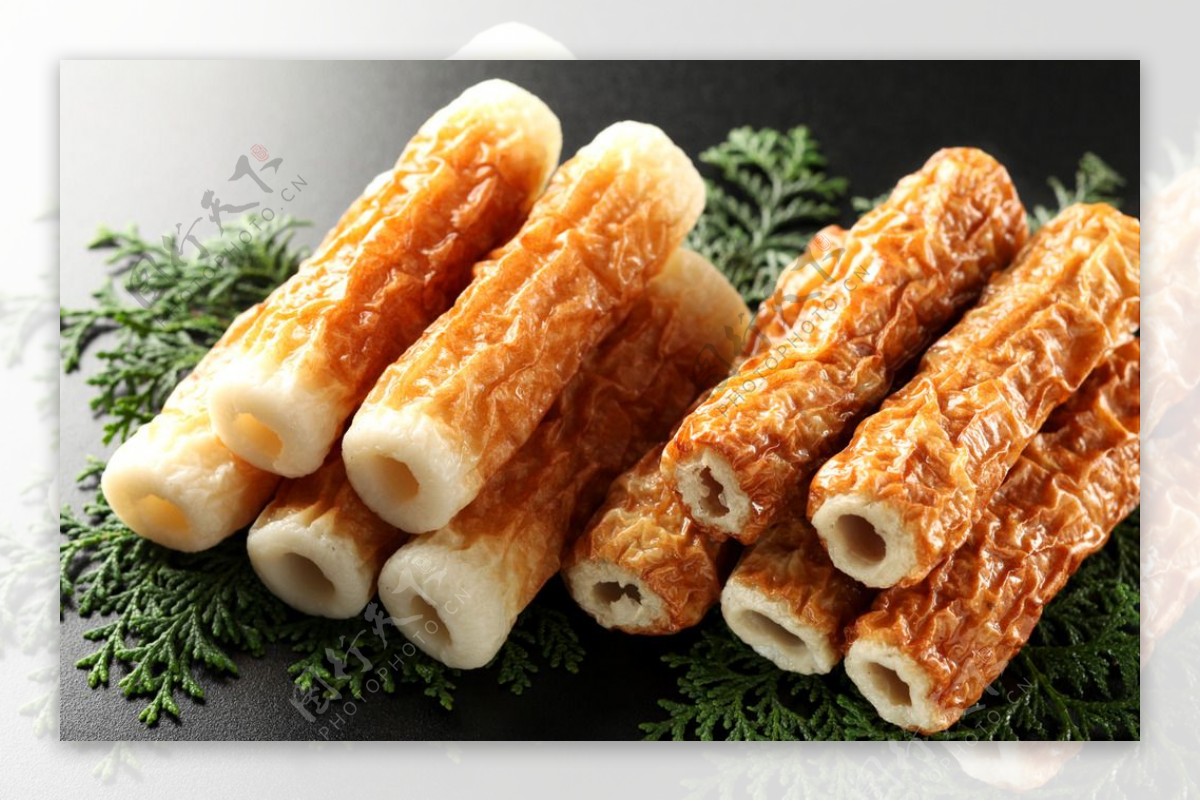
As stated from Tsutako, Sachiko might be like 竹輪 (ちくわ)like picture here
→ has a hole and there is no hard core (= vulnerable, weak)
though Sachiko might be thought of as kind of princess who shall have her cold heart (with いついかなる時でも might be a simile to however long you cook something, the core will remain. Making it more unexpected to see Sachiko that vulnerable)
Yes, sometimes we also have different English (or in my case German) semantics that might interfere
What is up with this btw? Is it just like a stupidly complicated いつか? I’ve seen it a few times in the books, and am always stumped on what to do with ir
Apparently it is いつ + いかなる where the later one seems to be a set phrase and often used in いかなる場合でも (see jisho.org link here), so for me adding いつ here feels like an emphasize (EDIT: to the following 時). How do you think about this?


 This アルデンテな芯…