Interesting, I definitely hadn’t spotted that (my brain jumped to reading it as 階段. My dictionary includes stairs as a potential meaning, and this website seems to have it as the first meaning. So maybe it is a legitimate alternative word??
2 Likes
Hm, it could be possible (given that she uses it in the same way at a later point  ) but my Japanese reading partner stumbled over it as well when we read that, so it doesn’t seem to be a common use of that word. Will see if I can investigate further, and report back.
2 Likes
I’ve been out of town and am now catching up!
chapter 3
“I write my novels without any notes or references, just me and the blank page” – clearest sign that Ogawa is spinning us a fairy tale 
Seems like ojiisan is shujinko’s only family (not blood relation, but still a familial relationship), excepting any mystery itoko living too far away over the mountains. It’s nice that he’s here, but it’s too bad that he keeps so much distance in their relationship, with his formal speech and treating her books like holy relics. There’s loneliness even in this close, loving relationship.
I got an answer to my bird question. And, interesting that the islanders didn’t sink the ferry. I guess they’re just supposed to not think about it. This aspect of the story reminds me a little of The City and the City by China Mieville. But in that one, people intentionally “unsee” things*, whereas in this one, people can’t help but forget things. I wonder how dangerous it is in this world to reminisce about forgotten things with someone else.
*(Don’t worry, not a spoiler. It happens in the first paragraph.)
Good one. I like this.
I agree that language is an critical aspect of memory control here, but I feel like more than just the words are being forgotten. When in chapter 3 the narrator sees the bird, it’s not just that she doesn’t know the name of it–it’s also that it feels meaningless to her. This doesn’t seem like a situation of strict linguistic determinism to me, where the loss of a word causes the loss of the concept. The word and its significance are closely intertwined, and both are lost (in a hazy, partial way) at the same time.
4 Likes
I read chapters 4/5 during some turbulence on a flight so safe to say I wasn’t paying full attention. We have some “plot” now although still very little in the way of things actually happening. Looking forward to continuing.
Very Exciting Typo Discussion
I actually paused on that exact word as well but just chalked it up to 段階 being used to mean a literal physical step/steps. Actually, when I started learning Japanese I came across the word きざはし (later edit: I actually just looked this up and maybe it was simply 階, not 段階 - my memory isn’t to be trusted) as a reading of 段階 and remember asking a knowledgeable friend about different words for stairs and steps (rivetting discussion), although I don’t remember too much as my Japanese level was terrible then and I mostly didn’t understand what my friend was trying to explain. I have no great insight into whether we truly have a typo or a creative choice on our hands here though.
2 Likes
And here is week 4!
Reading
| Week | Start Date | Chapter | Page Count |
|---|---|---|---|
| Week 4 | Oct 25 | Chapter 6 | 13 |
Participants
Mark your participation status by voting in this poll.
(Please feel free to update your status whenever you like!)
- I’m reading along
- I have finished this part
- I’m still reading the book but I haven’t reached this part yet
- I am no longer reading the book
0
voters
Oh I forgot to mention, there is another typo (this time a real one!  ) on the very last page of chapter 5 - did anyone spot it?


Also, I searched for the other typo-or-not and came across this page:
which states 段梯子という意味合いがあり、こちらは階段と同じ意味合いですが、現在あまり広く使われていません。Googling for 段梯子 brings up pictures like
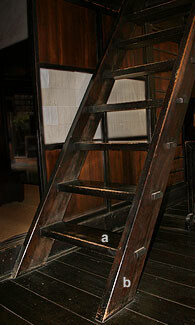
so I guess that’s where we have the resolution of this issue. 
2 Likes
I encounter typos fairly often in the course of my translation work. Some of them are immediately obvious, but some of them have me scratching my head and doubting my understanding for a long time.
Chapter 4
So, we meet the memory hunters, the branch of the secret police that abducts people for unknown purposes. For secret police, they sure aren’t very secretive. I wonder if they were more covert in the past, and have grown more overt over time. MC and R’s conversation seemed to suggest that this was the case.
Speaking of which: Oh look! A character with a name! Ha ha.
In previous chapters it was hinted that MC’s mother had been disappeared. Now it’s confirmed. That genetic component should give MC pause… And so should R’s way of getting her to say things in public that she probably shouldn’t.
2 Likes
Whoops, sorry nikoru, I think I accidentally made my post as a direct reply to yours. Sorry to ping you.
Also, I forgot to mention this word from chapter 4, which is new to me: 尻餅. What a silly word!
2 Likes
Oh, nevermind! It was kind of a reply to my post, so all good. 
Haha yes! It comes from a ritual that was / is performed with small children when they turn 1 year old. That’s where the name comes from apparently: 尻餅 - Wikipedia
3 Likes
Chapter 4 reply
Sort of 
I think this dude is incredibly fishy. Why does he know all these things? What if he ends up being an undercover member of the memory police, just trying to lure people into talking about secret things when they feel safe? I’m afraid of him.
2 Likes
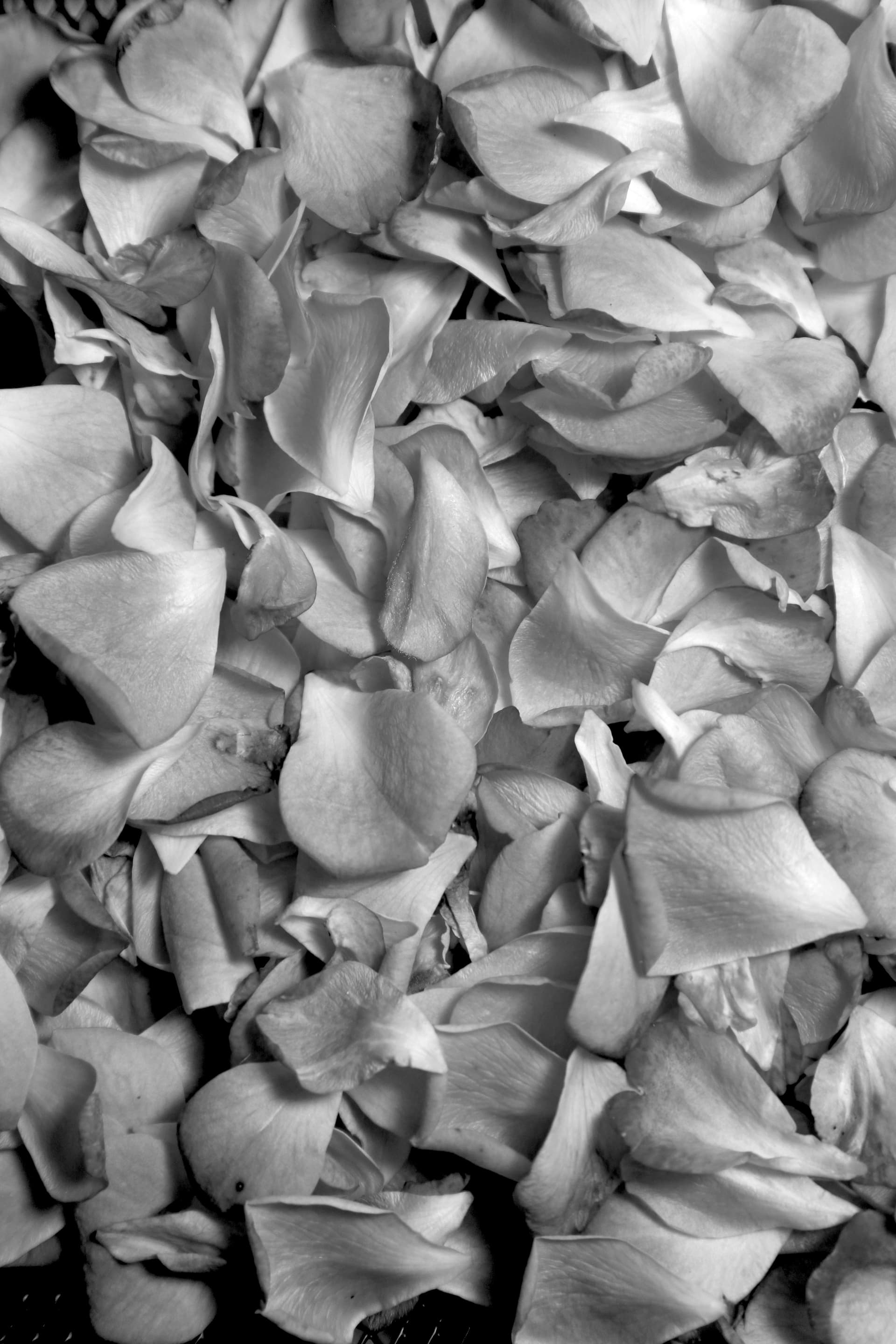
Photo by Rebecca Matthews on Unsplash
Chapter 6
Disappeared things: green beans, roses
I was very confused at the start of the chapter. I thought maybe our narrator was talking about the steps up from the basement, and really didn’t understand the similarity with a lighthouse…
So now we have the first part of the story within the story. Why is there a typing school within a clocktower? Seems like an odd place. Anyone have any thoughts about the boyfriend?
Question
わたしはいとこのお兄さんと一緒でした。お兄さんが足の傷を一つ一つなめてくれました。
Did this strike anyone else as strange? Her older cousin is licking the scratches/cuts on her (legs?feet?)
Speaking of odd - the largest part of the chapter is dedicated to a new disappearance. The image of the river of petals is striking and strange. It is interesting that the children and the islanders feel able to gather and comment on this 現象. But in its wake are the denuded bare branches in the rose garden and our narrator who can no longer remember the shape of the flowers. (It certainly doesn’t seem as if she has the genetic ability to remember forgotten things, even if she would like to).
1 Like
淋しさ
I think I mentioned earlier a sense that the dominant feeling in this book (apart from the undercurrent of menace) is 淋しい.
I was reflecting on this at the end of chapter 6.
副え木がしてあったり、肥料がまいてあったり、そういう手入れの跡が残っているのを見ると、余計に淋しげだった。
The bare branches of the rose bushes, left poking out over the hillside like bones of a skeleton, the marks of the efforts made to care for them - rendered futile by the disappearance all evoke a sense of quiet emptiness.
As I read this section, it seemed to me that the former rose garden which now feels like an anonymous cemetery is the perfect expression of 淋しさ. (The visual echoes of the kanji radicals here seem particularly applicable to this scene)
In contrast, in chapter 1, 小川 used the other kanji (the one that is more familiar to me because it appears in wanikani
懐しがったり、寂しがったり、慰め合ったり。もしもそれが形のあるものだったら、みんなで持ち寄って、燃やしたり、土に埋めたり、川に流したりもするの。
In my mind (though I could well be mistaken), these two examples track two different senses - one of personal loneliness, and the other of a desolate, emptiness (very crudely, the difference between feeling lonely, and a lonely place).
Chat GPT informs me that the main difference in usage is not the one I have suggested above - rather 寂 is the more common kanji, and 淋 is a more literary/poetic/emotional version. A quick kindle search indicates that in this book all except the second example above use 淋, while in ミーナの行進, all of the references to 寂しい use the common kanji. I’m not sure if that is significant or not.
Perhaps @nikoru your Japanese partner can enlighten us?
PS I definitely did not spot that typo… (It’s cute though!)
2 Likes
Hi everyone, this is my first natively post ever!
I finally caught up on my reading after being behind all last week. I just joined 2 book clubs after doing no Japanese for 6 years (I’m also reading 掏摸 (スリ)/Pickpocket in another book club) so there’s a lot of vocab refresh slowing me down.
Despite its dreamlike nature, I’m finding this to be the easier of the two books. Perhaps because I’ve read a few Murakami Haruki books before?
I thought I messed up and lost track of things when she went up the stairs and started talking about the Lighthouse. But I guess it was just a shift from her memories into the story she is currently writing?
With this book I’m still not sure what direction it will go. Is she going to investigate and “solve” the mystery of the island? Or is it going to turn into a completely different kind of story.
6 Likes
Welcome!!
Great to have you join us, and great that you are enjoying this. There are a few of us also reading 掏摸. I agree that so far this is the easier book (despite スリ having a lower Natively rating!!)
I’m not going to answer your question - that would involve spoilers. But as a general comment, like Murakami, Ogawa often creates worlds in which strange things happen that are never fully explained. (Our other recent read was more conventional, but several of the short stories that some of us read in 妊娠カレンダー were deeply puzzling and ambiguous).
3 Likes
Nearly caught up now!
Chapter 5 plot
Despite what I said before about Ojiisan being too polite and therefore too distant, I was kind of glad to see him going nuts over the sweater. Handmade sweaters are treasures, and they don’t always get the appreciation they deserve.
And then… things happening! More reveals! An actual name! When Inui and family appeared at the door, I initially misinterpreted it as being MC’s family, so I thought they were all ghosts. Look, it’s Ogawa’s fault for priming me for spooky stuff by having MC go down into the basement that had been locked for 15 years  I loved the details about the family, like how they were all touching each other, or how the little brother’s childlike curiosity was still visible even in these tense circumstances.
The reveal that MC’s mother came home as a corpse a mere week after her departure was a shock. I guess a part of me was holding out hope that, although she’d been taken away all those years ago, she was actually still alive somewhere and would get rescued at some point.
It was nice to get descriptions of some of her sculptures. It sounds like she worked in stone, wood, and metal? That’s a pretty wide variety.
I don’t think the secret police are offering scary-big remuneration to someone they consider a dissident here. I think Inui is a highly skilled and notable researcher who has been compliant up until now, and the secret police think they will purchase him as a powerful asset.
Some words and phrases in chapter 5 that caught my interest
片棒をかつぐ - new to me.
拍子抜け - also new to me. I looked up 拍子 first, so I thought this phrase must be something like “skipping a beat,” but the JE dictionary said it’s actually “anticlimactic.”
威厳 - but now, here’s one where I wasn’t so sure about the JE dictionary entry–“dignified, magestic”? The kanji suggested something more sinister, and indeed, the JJ dictionary entry was 人を圧するようないかめしさ.
拒む and 辞退する - two synonyms for 断る with different nuances
人間をスプーンの束みたいにして連れ去る - what a vivid image!
3 Likes
獏
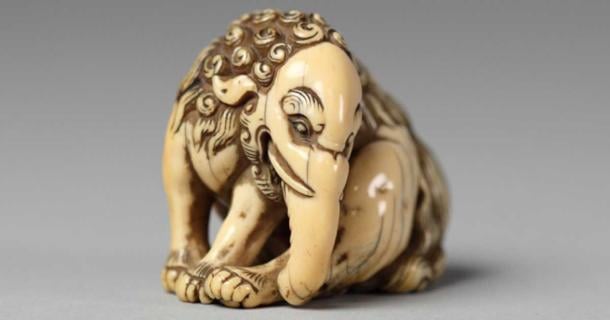
Image from the Met museum
Maybe other people know this already and I am late in realising the significance of this word…
When this kanji came up in chapter 5, (the carved wedding gifts of 乾さん handed over to our narrator for safekeeping), I had just looked it up in the kindle dictionary and thought “a carving of a tapir, that’s a bit random for a wedding present”
But when it came up in my flashcards this week and I looked it up again, it became obvious (belatedly), that almost certainly the carving is instead of the Japanese 妖怪 of the same name
The wikipedia page and this Ancient origins page have plenty of interesting information.
They are traditionally a chimeric creature with the trunk of an elephant, the legs of a tiger, the ears of a rhinoceros etc. There is a theory that they may reflect a real, but extinct Chinese creature
But the crucial bit for our story is the old story about the 獏. The legend is that The Baku can be summoned to consume bad dreams. (Children would go sleep with a 獏 figurine by their bed. If they woke in the night, they would call out 「この夢を獏にあげます」and the ばく would apparently eat their dreams. But this creature came with a dark side. If it remained hungry after eating your bad dreams, it would keep eating and consume your hopes and desires.
So the obvious relevance to our story is the way in which the 獏’s eating of dreams (or hopes) has parallels in the disappearance of things and memories from the island.
So that raises an interesting question. Did the narrator’s mother keep making these carvings because she wanted to protect herself or her friends or family from bad dreams, or because she thinks that the memory disappearances are like the 獏 stealing the hopes of the islanders or because (more literally) the mechanism behind the disappearances is actually somehow connected to this Japanese mythological creature, and these are talismans to try to protect loved ones from amnesia? What do you think?
3 Likes
Welcome to Week 5!
Reading
| Week | Start Date | Chapter | Page Count |
|---|---|---|---|
| Week 5 | Nov 01 | Chapter 7+8 | 22 |
Participants
Mark your participation status by voting in this poll.
(Please feel free to update your status whenever you like!)
- I’m reading along
- I have finished this part
- I’m still reading the book but I haven’t reached this part yet
- I am no longer reading the book
0
voters
1 Like

Photo by Muhammad Hassan Javed on Unsplash
Chapter 7
A number of interesting things in this chapter, though it isn’t all easy to follow. We learn more about the islanders contrasting response to disappearances. Our narrator’s wealthy neighbour seems to exemplify the ’normal’ unquestioning acceptance, dropping rose petals one by one into the water. Even though this is the 最も美しい形見 of her father, she appears to lack any sign of regret. She makes a dignified bow, but doesn’t look back.
Our narrator exhibits the more anxious, questioning response. She asks the obvious question - how come the wind only blows off the petals of roses and not other flowers?, but if おじいさん’s response is anything to go by, this is a question that has no answer within the story.
She is obviously worried about the progressive disappearances. More things are vanishing than new things are being created. She worries (in a passage that I had to read several times to make sense of), that the fabric of the island is becoming full of holes, desiccated.
And the おじいさん replies with his own form of philosophical resignation. When one thing is lost, something else takes its place. Even when his livelihood disappears, he finds another job, and the ferry becomes his home. He makes a comparison (that I found hard to follow) with the law of osmotic pressure. I think the idea is that when one thing disappears, other things spread out. (When the osmotic pressure in a solution falls, water will move across a semi-permeable membrane to achieve a new equilibrium). (Maybe, just maybe here is another reference to the 密やかな結晶. When something crystallises from the solution of collective consciousness, it doesn’t leave holes in the solution - instead, the molecules spread out, the overall concentration falls).
The allegorical reading. [This is my theory about what the novel is really exploring, so don’t read if you prefer to develop your own theory.]
Maybe it is obvious to others, maybe not.
I think that at least one way of reading this novel is that it is about dementia.
The progressive disappearance of items from the memory are analogous to the progressive loss of memories (and capacities) that occur with Alzheimer’s disease or other similar neurodegenerative processes.
With that in mind, the different responses noted above reflect the ways that different people respond to this illness. We have the benign ignorance of the wealthy neighbour, who doesn’t seem to notice or care about the disappearances. We have in contrast, our narrator’s anxiety about the future - she is conscious of the forgetting, even as she is susceptible to it, and she has this sense of being hollowed out from within. And we have the zen-like acceptance of おじいさん. For him, the disappearances are just a fact. 「私が保証いたします。忘れること、何も残らないことは、決して不幸せではございません」
1 Like
PS I could be overthinking. In the Synder translation, he just refers to a sculpture of a ”tapir”, and on re-reading, the narrator refers to her mother enjoying sculpting this “みた事がない動物”.
But I can’t believe that the overlap with the dream and hope stealing mythical creature is a coincidence. Maybe all will become clearer later in the book. Or maybe this is an Easter  left by 小川先生?
2 Likes
Hello! I’m joining late so I have some catch up reading to do, but I finished 妊娠カレンダー recently and am looking forward to reading another book from 小川洋子
3 Likes