I’m really surprised to hear that about the Snyder translation! I absolutely thought it was the mythological creature. After all, that’s the one that has a long history of appearing in art. I hate to ever assume that a big-name pro translator made an error—maybe he had his reasons?—but I’m going to continue assuming that Ogawa meant the mythological creature.
I didn’t know that part! That adds an interesting resonance to it, for sure. I can see this being a hint that the forgetting was initially protective (my imagination runs wild with the possibilities), but then it couldn’t be stopped, and now it continues to happen with things that the islanders don’t want to forget. Although that would be pretty direct and straightforward for Ogawa, so I guess that’s probably not what happened.
Welp, she definitely got me with that chapter opening. I didn’t clock what was happening until she finally mentioned the typing school koibito. I’m curious to know if there was a change in tone/writing style that was too subtle for me, but would have been more apparent to a native speaker.
Typing school in a clock tower is extremely strange. I didn’t get the sense that MC wrote fanciful books. Maybe office buildings have disappeared?
I get the feeling that this story-within-the-story is going reappear and start taking on an important role.
Omg yes! Um, EW?
Super fresh green beans with potatoes and hard-boiled eggs in a little mayo sounds tasty. I want to try it.
The vivid description of the rose petals floating down the river was wonderful. I felt like I could really see it in my mind’s eye, which is remarkable because it sounds like an astonishing spectacle.
The description of the scent reminded me: A few weeks ago, the roses outside my building were in their short fall bloom. I stole a petal from one that was falling apart, and put it on my little “altar” where I like to display signs of the season, small gifts received, etc. I was amazed that for the next day and a half, every time I came near that space, I could smell the rose. From one petal!
Now I’m wondering who’s going to go dig up all the rose bushes. Cuz, uh, I don’t think they’re all gonna die on their own just because their blossoms got pulled off.
Interesting that, so far, only nice things disappear! There hasn’t yet been any mention of disappearances of mosquitoes, or dog poo, or strep throat…
I finally managed to ask about this and learned this:
寂しい has this nuance: people or things have disappeared or are not there, sadness regarding the emptiness (“my flat is large and empty and nobody is there”).
淋しい has this nuance: when the connection to people becomes thin, when a loved one is not there, etc.
He also said that the former kanji is jouyou and therefore carries both meanings (as you often have it) but the lower one only has the second meaning.
No I don’t think you are overthinking. I asked my reading partner what a 獏 is, and he said immediately that it’s a phantasy animal that eats people’s dreams. Then he researched a bit and corrected it to “eats bad dreams”. 獏-shaped pillows were very popular in the Muromachi period, for example. So I think Japanese people will immediately make this connection, and Snyder seems to have failed to give a good translation, sadly…
Oh wow! I for one hadn’t thought so far, but it makes a lot of sense! And we not only have the various responses to it of different people, but we also have those that have a genetic disposition of not getting it
Now I’m far from being native, and I was like ??? at first as well because the scene felt like continuing from the previous chapter, but after a page or so I realized that it’s written in keigo, and then I figured it must be her story that we are reading here.
But I asked my language partner about it and he said he didn’t get it until we return into “reality” where she says that she wrote that far. Until then he thought it’s a childhood memory of hers.
Thanks! That is really helpful. (I was also pleasantly surprised that I could mostly understand it. Usually explanations in Japanese of the nuances of words are very hard work…)
We learn more about the narrator’s mother in this chapter, and the relationship with the mysterious R氏.
For the first, it seems that the mother needs three things to be able to do her sculpting -
水の音と、べビーサークルと、イリコ
We do receive a kind of explanation of this, but at first glance this seems like a particularly unusual combination of necessities.
Speaking of unusual, [almost as odd as the older cousin licking spiky grass scratches (in the narrator’s story within the story a couple of chapters back),] we learn here that the mother would feed her toothless infant イリコ when she started grumbling
I have assumed that this refers to dried sardines (and not 海参, which sounds even more disgusting). But does this seem to others like a very odd (and possibly dangerous) thing to feed a baby??
As for R氏 - I have a question. Why does he only have an initial? We’ve had very few names in this book. Only 乾一家 perhaps.
There is this thing in some Japanese fiction, where some characters (and sometimes some place names) are referred to by their initials. But what does this mean here? Why doesn’t this character have a name?
(It isn’t unique to Japanese novels. Think of ‘K’ in Kavka’s ‘The Trial’. (Presumably in that case, it is supposed to indicate that the main character is possibly a version of the author)
I kind of think that this is supposed to indicate that this is a real person whose identity the author is protecting? But it seems odd in a novel that is very obviously not the real world.
A couple of speculative options: maybe K is the initial of Ogawa’s editor? or her husband?
I was worried about our narrator taking R down to the basement, with the special sculptures left behind by the Inui family and the mother’s secret dresser [a secret even from her husband]. I’d been suspicious of him previously and wondered if he might be an informant for the secret police. (I guess that is still a possibility, like Mr Charrington in 1984…). When he starts quizzing our narrator about the contents of the drawers, I became more worried still.
But as the chapter progresses it looks instead as if he is one of the genetically inferior* ‘rememberers’…
What do you think - is R on the level? Who is he supposed to be? What do you think of the relationship between R and our 女主人公?
Also in this chapter - there are a couple of references to 密やかな in case that is relevant.
The first is 川の流れるひそやかな音 (no kanji for this instance)
The second is R’s use of the word “Emerald”
それは奥深く密やかな響きを胸に残した (kanji this time, significant??)
One other interesting thing I spotted. There is a reference to 蚕 and 繭 in this chapter. If I remember correctly, the narrator in Dormitory described herself using the same metaphor?
*I have referred to them as inferior - since the ability to not forget is treated as a disease, but I’ve just thought of the parallel with the mutant gene in the X-men stories - where those who possess the X gene are hunted down, imprisoned and exterminated…
不思議に思ったこと: MC wonders aloud how the wind knew to only blow the rose blooms off their stems. Was it the wind?? I may have to revise my earlier understanding of how this island works. Maybe the birds did know to leave.
Ojiisan tells MC not to worry about the imbalance between creation and destruction. Our lives just 薄くなる to balance things out! No big deal! Based on the way MC observes Ojiisan and simply says 「そうね。大丈夫よね」, I don’t think she buys this. I think she let it drop because she didn’t want to distress him.
Chapter 8
Wow, hmm, this time the story-within-the-story was zero percent interesting to me. I hope that SwitSMC (yikes, what an acronym) will get to have a personality eventually.
Of course, SwitSMC doesn’t get a name, and neither does her 恋人. The fact that she keeps calling him 恋人 instead of by his name felt particularly weird to me. The lack of names in this book make 乾 and R氏 stand out as if they were marked with fluorescent highlighter.
I was freaking out every time MC granted R’s next request. She seems to trust him implicitly, despite knowing nothing about his background. And he either trusts her entirely, or is playing a convoluted long game.
不思議に思ったフレーズ:
MC saying まだ十歳かそこらの子供だった about her age when her mother was taken away. I cannot imagine someone not remembering the exact age at which they experienced such a tragedy! But I guess it’s possible.
まつ毛を伏せた - I don’t understand this phrase. He… closed his eyes? Half closed them? Turned his head/gaze down?
One interesting part of the start of the chapter is the explicit shift from the mysterious and quasi-magical disappearances of objects and concepts from the island to the sinister, deliberate and definitely non-magical ‘disappearance’ of islanders. There is obviously a connection between the two of these, since it is those who can remember (cannot forget?) who are targeted, or who go into hiding. But the other connection is that the response of other islanders to the disappeared is to avoid openly discussing the phenomenon for fear of finding themselves at the receiving end of a sudden visit from the dark green canopy-covered trucks and the secret police.
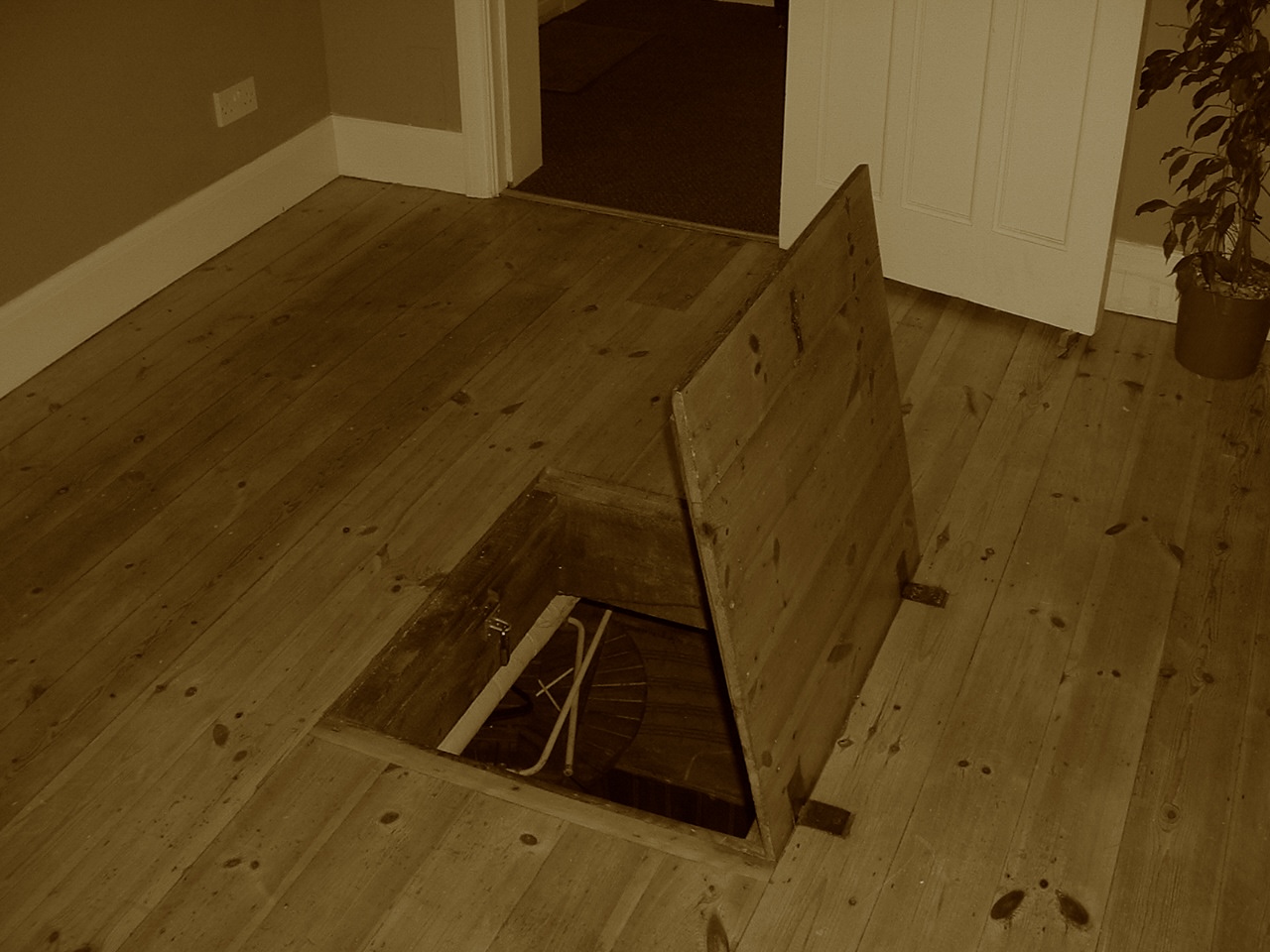
The second part of the chapter is the creation of the secret room. I still can’t quite picture how this fits between the floors of the house, but articles like this give a bit of an idea of the size of a 3畳 room. おじいさん really comes into his own in the making of this (I was amazed at the idea that this was all done in four days, but then I guess it is small…)
One of the interesting elements of the novel (that I suspect will warrant more discussion later) is the connection to Anne Frank. In a number of the English articles about Yoko Ogawa and this book, she mentions how she was inspired by reading Anne’s diary as a teenager, and there is a clear inspiration for this part of the novel. Indeed, a few years after 密やかな結晶, she wrote a non-fiction short book/essay called アンネフランクの記憶, detailing her visit to Amseterdam, Frankfurt and Auschwitz. Might be something to add to our club reading list?
PS Here is Anne Frank’s room
It was 13ft by 6ft - so 7.25m2.
That compares with the secret room in this book - about 5m2
Once again, I was a bit nervous about our narrator talking so openly in the lobby of the publishing house. But it seems like perhaps that was deliberate - I think she talks about their conversation being masked by the hubbub, or something like that.
I was a little confused - R seemed to say that he was ready to go into hiding. But then he also seemed to say that he couldn’t leave his heavily pregnant wife on her own (which suggested to me that he wasn’t ready to go). Did I misunderstand something?
The whole complicated sequence with R meeting a stranger outside a pancake shop - with prearranged signals etc. I can appreciate the need to try to mislead any watchers. But it seemed rather extraordinary to go to all those lengths and then to come in our narrator’s front door. (Surely it would have been better to go over the rickety bridge and in the river door??)
One thought about the plan. Our narrator is obviously going to have to feed the hidden editor. How is she going to conceal her sudden need for twice as much shopping?
A possible thought about the hidden room. I think it is described as being between the first and second floors. Is this between the ground floor and a floor above? Or between the ground floor and the basement room? If the former, I find it very strange how it could fit. If the latter, I had an idea that the house is built on sloping ground down to the river. Then there could be a main house that juts out and is built up, with underneath the basement room - and a triangular non-usable space. The hidden room could be within that?? But it that were the case, the obvious entry point would be from the basement, rather than through the floorboards?
I happened to read this chapter while I was in a state of heightened anxiety about personal life stuff, and boy did it feel tense!!
Ojiisan seems to be an absolutely indispensable 何でも屋. I would like to grow up to be this helpful and dependable (but I fear that’s not likely to happen).
Oh, that’s very interesting! I would be interested in reading that. I should read Anne Frank’s diary first–I’ve only read the graphic novel adaptation by Folman and Polonsky (which is gorgeous).
I found many of the characters’ actions downright mystifying in this chapter.
MC invites R to the 隠れ家 while they’re speaking in a public place, even though it’s already been established that they sometimes meet in the much more private location of her house.
R initially refuses, seeming like he’d made up his mind about this long ago, and explaining that his wife is eight months pregnant. Us readers definitely didn’t know about his wife. MC had previously said that she knew nothing about his family, and it certainly seems like she would have mentioned this critical detail if she’d known it.
But without batting an eye or missing a beat, MC says okay, well, I really think you should go into hiding right now. And R immediately changes his mind.
???
WTF is going on here?! I’m an American who has lived in America almost my entire life, so I know I have a very different approach toward being open about 本音 and private life stuff compared to the average Japanese person. But this still? Seems really weird to me???
@domjcw , I totally agree with your point about having a complicated meeting arrangement only to walk right in the front door. I was also wondering why they were all sitting around having tea, presumably right in front of windows that other people could see into. The rain provided some cover, but surely those extra precautions would have been a wise idea?
And, good question about how the secret room fits into the house! I’m not sure either. But I’m pretty sure that it is between the first and second floors, since the entrance is from the office, and I recall the secret police tromping up the stairs to get to that room when they came to clear out all the bird stuff.
Maybe the answers to some of these questions will be revealed in time.
I wonder if this is less of a concern. I could be wrong, but my sense is that it usually isn’t possible to see into Japanese houses (?relating to fusuma or curtains or blinds or just window design). I think the boundary around private spaces is much more closely protected. I think I read somewhere that to Japanese eyes, the western (?particularly US) habit of having large windows through which personal space is visible, seems very odd.
There is a lovely poetic passage in this chapter where R氏 tries to explain what it is like to remember things. (There is an inversion in this paragraph, because obviously for us readers the phenomenon that we find strange is the sudden erasure of memories. But to our narrator, it is the pathological remembering that is so hard to imagine).
I found 心には輪郭もないし、行き止まりもない a little hard to understand (the heart has no corners or edges?) though the overall message is clear
(After that is an even more striking image, though I confess I couldn’t quite work out why the conversation went in this direction. The narrator and R imagine what it would be like to literally hold your warm, slippery heart in your hands…)
I’m a little worried about our nameless narrator and おじいさん. For all the care they took to create the hidden room, and to arrange for R氏’s sudden disappearance, they seem to be making some risky mistakes. For example, she is buying disposable razorblades (surely this will make a nosy store attendant think that she has a new male companion). The secret drop spot for messages seems well designed to stop someone stumbling on the messages by accident. But surely all the secret police need to do is follow R’s wife to see that she is going to the old primary school and poking around in the old weather observatory device every ten days. Then they wait to see who else turns up…
I got a little confused. It seemed like the only contact between the wife and おじいさん was supposed to be through the message drop. But then it sounds as if went into the pharmacy. Did he talk to her? did he break his cover? Or did he just wander in pretending to be a customer so that he could report back? (At one point he says that she wasn’t asking questions like ‘where is he, who is hiding him’ - instead just saying ’よろしくお願いします’, but I wasn’t sure if this was literal or surmised??)
There is a phrase that I found interesting
部屋を潤すものは何もそろっていなかった。
潤す seems to mean ‘brightening up’ or something here?
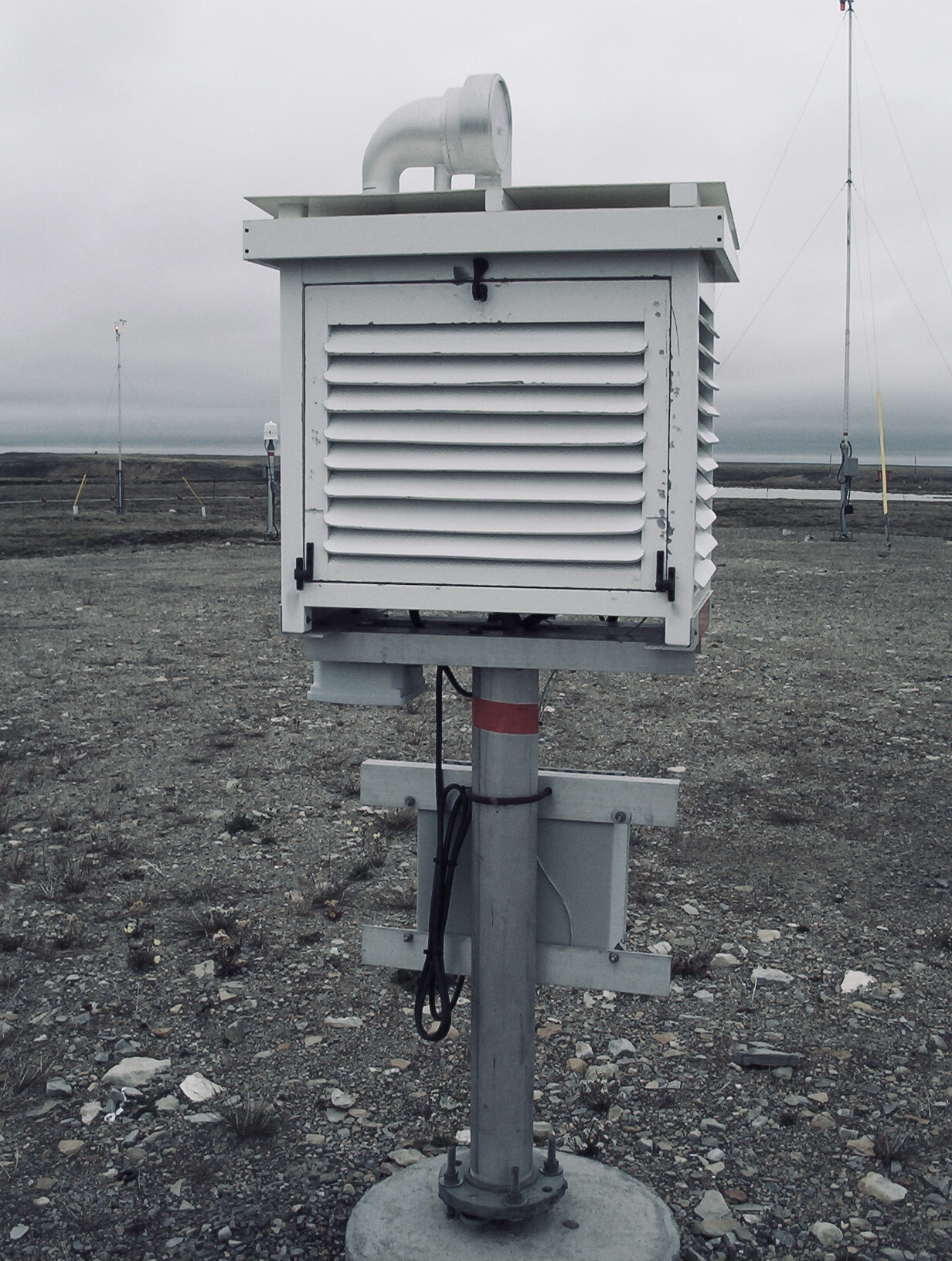
Incidentally, although it is not a common word, apparently all Japanese are exposed to the word 百葉箱 in primary school, because it is very common schools to have weather stations. (I confess that I am not sure if I have ever encountered the technically correct English term - “Stephenson screen”…)
The story within the story is slowly escalating in intensity.
There is another lovely bit of Ogawa description - the invisible silence flowing out from the stopwatch and enveloping the typists as they wait for the timed typing challenge to begin
How did people find the scene of the solo typing lesson?
One interesting question that I thought of was the relationship between the two stories. We have a female protagonist and a male 先生 who has superior skills (typing/memory). The typist ascends into the strange room in the clock tower, while in the main story we have the inverse, our (still) unnamed narrator descending into the secret room. They are brought together in very close physical proximity in each case, and there is an intense connection between them. In the typist story, we now see the latent sexual tension clearly being released. [I have a vague memory that clock towers and bells ringing were recurring visual/aural euphemisms in a film era when sex scenes were much less explicit than they are today]. But the tension in our outer story remains.
Is our narrator deliberately, or unconsciously writing her fantasies in the story of the typist? Is she trying to give the editor a hint?
Just finished reading this one with my friend and am able to ask him some questions
I did not get this either, but the idea is: One might think that 心 (heart? soul? …) is a given space with a defined border, or that it has a limited capacity. But R氏 dispels this suspicion by saying 輪郭もないし = there is no defined outline or border, basically: the available space is endless, and 行き止まりもない there is no limit to its capacity, basically: it can store endlessly many things.
This feels like a bit of a turning point in the conversation, right? My friend thinks that the narrator is really interested in learning about his memory, and what it is like in comparison to her own memory, and he also thinks that she wants to somehow learn about her own mother’s memory. Because in her own memory, things suddenly get pulled out with the root and disappear entirely, while in his memory things may persist or may fade, and may be revived as well.
My own theory is that the narrator is secretly in love with R氏, and that’s why she turns to such a poetic description. I think she also wants to get closer to him by touching his heart, in a sense.
I was surprised to even read that there is still some connection between R and his wife. I would have thought this is way too risky to do…
We were surprised about that as well as we read it.
I think he talked to her and learned about her (also mental) constitution.
It is related to creating a relaxing atmosphere, which is totally absent in the small hiding place. jisho.org’s “to enrich” is probably the most fitting here?
My friend says that he is not sure whether children who now attend elementary school still know this, but for sure Japanese who are now middle-aged would know it.