The initial tension of hiding R is dissipating. I agree that a lot of the actions that MC and Ojiisan are taking seem incautious and naive. I guess this is a surreal fairy tale, not a thriller.
This was my first time encountering the phrase 部屋を潤す too. I really like it. I don’t know how strongly the “moisture” connotation comes through to a native speaker, but it’s very strong for me. A healthful freshness to replace a cold, dry feeling. The next time I bring home some flowers, I’m going to proclaim that I’m “moistening up the room.”
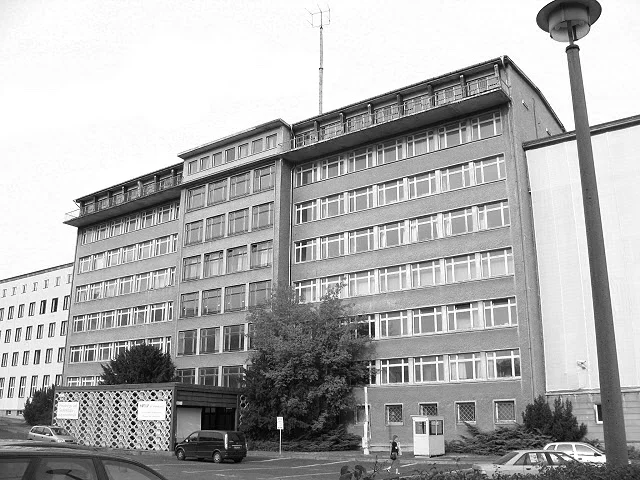
Huh, thank you for posting that. Based on my dictionary’s entry, I was imagining something like a bin or a big storage shed. What an interesting structure.
The gelatinous heart seemed to come out of nowhere, but I found the image charming in its weirdness. The fact that MC shared it and R was willing to run with it suggests that they have similar sensibilities–which would fit with their having a good writer/editor relationship.
Chapter 12
I’ve been reading some Victorian novels lately, and it seems that there was an absolute mania for physiognomy at the time. Every other page, someone is reading the greatest depth of feeling from a tiny glint of an eye. The minutely detailed face reading at the start of this chapter reminds me of that.
Interminable. I’m just not enjoying the story within the story very much! It feels bloated, yet lacking substance at the same time. If anyone is enjoying these passages, let me know what you like about them–maybe that will help me enjoy them more.
The loss of photos is pretty tragic. It’s fitting that such a potent memory aid would go, but ouch.
We’re getting hints of some serious life-affecting scarcity in this chapter. The availability of food seems quite different from present-day Japan. I can’t figure out how large and populous the island is supposed to be, but it seems possible that there might not be enough farmland to support everyone comfortably. And since they’re cut off from the outside world, the failure of a particular crop is likely to affect the whole island in a dire way. The final sentence of this chapter brings that home.
By the way, I can’t figure out if 木の実 is just nuts and seeds, or if it extends to things like apples and pears and stone fruits?
I am enjoying them, but I have an advantage in that I know a little about where this story is going (from reading previously in English). I won’t reveal anything, but there are developments to come.
I agree that it is slow (though I suspect if we were reading it without the main story that wouldn’t be as striking). My sense is that it shares some features with other Ogawa short stories, with a slow burn in the build up, the full strangeness taking a while to manifest.
I assumed that based on the mention of their importance for winter sustenance. Not sure if that was the correct assumption.
Thanks. I shall await the developments and see if they change my mind! I’ve noticed that I generally have less patience when I’m reading in Japanese compared to English–even when the Japanese is relatively smooth reading for me, like with Ogawa’s writing–so that’s probably a factor here.
Re. 木の実, further googling suggests that it refers to the sort of nuts and berries that humans might or might not forage from wild trees, rather than the kind of fruits and nuts that are intentionally cultivated in orchards and have been subjected to selective breeding over generations. Some pictures of 木の実
Our narrator doesn’t come out of this chapter looking very positive.
First, she almost loses it when おじいさん is taken in for questioning by the secret police. Thank goodness that R氏 is more sensible and calms her.
Then she pays a visit to the secret police that seems on the face of it extremely unwise.
(There is a different reading, that this is a complicated double bluff. Surely no-one who is concealing a memory fugitive in their house would be foolish enough to voluntarily walk into the headquarters of the memory policy. But of course, the memory police in turn might see through this, ie anticipating that this exactly the sort of thing that someone sophisticated might do who is actually hiding a fugitive, knowing that they would be thereby downgraded in suspicion. (Getting into Vizzini and the poisoned goblet territory here).
Oh, and finally, there is the very strange story about her childhood overdose…
A few questions.
What do you think the strange drink is that our narrator is given?
My theory is that this is coffee, which has disappeared from the island, and she does not recognise it. (That might be why she is unable to sleep later). If that is the case, was this a trick by the secret policeman to see if she is really afflicted by pathological memory? (perhaps a version of a Voight-Kampff test, to throw in another film reference…)).
Can anyone explain the link between seeing snow and shortcake… I think I eventually sort of understood the link between snow and sleep. Something like - when you fall asleep you don’t travel anywhere, you dissolve into nothingness. Just like the collected snow dissolves into the sea. But as for the cake reference - no idea. (I did wonder a little if this late night conversation was supposed to be deliberately rambling and semi-incoherent as might be expected from an insomniac at extremely-late-o-clock)
So we discover the reason for おじいさん’s detention. The story of the 密航事件 is very topical - the risks for the passengers heightened by the loss of materials for boats, expertise in navigating etc, though it is possible that some of the memory refugees have those skills.
We get a sense of the isolation of the island. The islanders are physically marooned from the rest of the world - but also seem to have lost any sense that there is a world beyond the shores of the island.
Incidentally, another metaphorical reading of the novel occurred to me. The novel could be read about humanity’s relationship with the planet and the environment - successive 消滅 - extinctions - removing creatures/plants from the world and our consciousness, but humanity continuing blithely on seemingly without care. The memory police might even be a metaphor for those who deny or actively contribute to environmental catastrophe. While those who are blessed/cursed with consciousness of the problem (pathological remembering) are oppressed.
Yet again, I was deeply concerned by our narrator’s failure to take basic precautions. Surely visiting the secret message exchange point on a snowy day and leaving very obvious footprints to/from the drop point is a major mistake??
We have the news of R氏’s newborn son. With the loss of photos, his wife has to resort to drawing a picture in coloured pencils…
(It seems like our narrator’s mixed feelings about R’s wife and son are pretty evident in her way of handing over (as an afterthought?) the precious parcel with the news…)
Also - there are two very odd images/stories related by the narrator in this chapter
One is of the child kept in a box in a freak show. Is that a thing? I’ve never heard of it, and can’t find any reports on very quick look.
The second is the whole weird conversation about the servants whose entire job was to polish silverware shut up in a stone hut. I really don’t know what to make of this.
(One possibility is that our novelist narrator might have a fairly active imagination and not a wholly reliable boundary between imagined stories and memory??? Perhaps the normal boundary is made more porous by the islanders’ memory affliction?)
Anyone have any other ideas?
I figured Ojiisan was going to get nabbed at some point–he was too kind, too helpful, too critical to the plan working. So, it’s happened. I can see how MC would want to bring him some care and comfort (although I’m sure Ojiisan would want her to stay away), and I wondered if it might be suspicious if she didn’t respond to the disappearance of this person she knew? On the other hand, she clearly doesn’t know how the secret police work–based on their response, it’s not common for regular civilians to turn up with 差し入れ. And then to keep asking questions… yikes… It would be easier to see this as brave devotion if it weren’t for R, but because she’s responsible for him, this seems foolhardy.
@domjcw I also thought the drink, if not drugged, was to test her for memories. If we’re right that that’s what it was, it’s interesting that she could taste the difference, even if she couldn’t place it–if she’s really a “normal” forgetter, I might expect the drink to taste like nothing at all.
The snow/sleep/cake connection was baffling to me. R says, “それが心の働きっていうものだよ。どんなに空洞だらけの心だって、やっぱり何かを感じ取ろうとしているんだ.” I wonder if there used to be a more logical connection between these things via some intermediate thing, but that thing has since been lost?
Some interesting words and phrases:
差し入れ - I’m curious to know what this is in the English translation. The specificity of this word plays an important role in the scene at the secret police HQ.
透明で柔らかい声の細胞液だけが伝わってくる - What on earth? Cellular fluid of a voice? And is it intracellular fluid or extracellular fluid? I’m not sure how I’m supposed to interpret this.
くじらに飲み込まれて、潮になる - I’m guessing that the intended meaning for 潮 is “seawater,” but I see that it also refers to a clear 吸い物 that’s often made with leftover bony bits of sea bream. I like the idea of a whale drinking in the fishy broth that is the ocean. I doubt that’s what Ogawa meant, though.
Oh… crisis averted for now. To be honest, I feel pretty ho-hum about this de-escalation of tension. Still worried for Ojiisan, though—he seems worse off than just ちょっと疲れている.
MC visits the 百葉箱 herself. At this point I don’t know what to make of our main character’s blatant incaution. Ogawa makes a point to thoroughly emphasize how pristine the untouched snow is, and how noticeable MC’s footprints are. Yet she walks straight to the 百葉箱 and (apparently) nowhere else, without even making a flimsy excuse about further snowfall possibly covering her tracks. I’ve tried to think up explanations for past questionable choices, but this is too egregious. Surely any reader would wonder why she’s not covering her literal tracks. Is Ogawa trying to tell us something about our protagonist?
And then—then! She barges right into R’s space without warning, and supposedly he doesn’t mind?! I don’t buy it. That’s a shocking intrusion, especially considering that that tiny room is now his entire world. I wouldn’t do this to my own partner of 10+ years.
I was also shocked by the gruesome story of the child in a box, especially because this wasn’t some fantastical thing she’s read or heard of, but a real child that she saw. She describes this unimaginable torture dispassionately.
Have there been other hints before that MC is not quite right in the head, and I was too dense to catch them? Am I overreacting now?
Maybe I’ve been carried away on the waves of her calm, dreamy descriptions. In this chapter, we’re treated* to two more of MC’s vivid flights of fancy—the description of the boat was so detailed that I doubled back to check that we were talking about an imaginary boat, not one she was actually seeing on the waves, and the description of the silver-polishing servants was engrossing, if a bit on the nose. I do think that MC has a particularly strong imagination that sometimes moves in strange directions. Perhaps that’s why she ended up becoming a writer.
*I mean this unsarcastically. Just want to clarify, since I seem to be angry about the rest of this chapter
Oh that’s an interesting and very fitting idea! Makes sense with the sleeplessness that followed.
OMG we were so on the fence during this scene!
I didn’t get the word immediately, and my reading partner explained it as intracellular fluid. My interpretation is that it is supposed to describe the voice as somehow purified, nothing disturbing is in its sound any more.
I was also confused by the word, and my reading partner said that it refers to the fountain that whales make when exhaling. Which makes sense, but I must confess I don’t fully get the picture here.
I don’t think so. But maybe the oddness of her behaviour has something to do with the memory disappearances. It would be pretty destabilising to have things disappearing from your consciousness, not to mention living under the constant threat of the memory police?
mmm- maybe it is like ‘serous fluid’, the clear fluid that oozes from swollen/injured tissue? A sense of something leaking where it shouldn’t, thin, lacking substance??
ooh - a whale spout or spume! How interesting. (Still don’t know what the whole section is about).
And, as I might have foreshadowed, the story within the story has developments…
The dark turn here seems quite consistent with other bits of Ogawa’s writing, even if there wasn’t much clue to it earlier in the story. What do you think? Does this make it more interesting?
I was struck by the teacher’s confession of what he likes about teaching typing - the fantasy of complete control over women - their utter inability to deviate from his rules. His kindness and solicitude in the start of the story now takes on a completely different meaning.
One interesting question that I asked earlier is what people think the meaning of this story is. Here are some thoughts
Theory one. (Psychoanalytic) One possibility is that this story should be interpreted in the light of our narrator’s state of mind and circumstances. Maybe she is feeling conflicted about having R locked up in her house as a kind of prisoner. The genders are reversed in the story - but perhaps she is unconsciously taking on the role of the typing teacher. Is the story a message to R, a confession or an apology??
Theory two. (Psychosexual) I wondered whether this is some kind of dark fantasy for our narrator - that she is imaging R locking her up in a room, and then being subjugated to his will. Perhaps she wishes that she were the one locked up in R’s house? (though probably without his wife and child)
Theory three. (Political metaphor) I wondered whether the oppressive typing teacher and voiceless typist are a metaphor for the secret police and the islanders - the latter are rendered quasi-voiceless (they certainly seem pretty powerless) and subject to constant fear, at the mercy of the green trucks and jackboot wearing police. The tower room is then a metaphor of the island, where the islanders are now trapped.
Theory four. (Wider metaphor). I suggested in an earlier post that the whole novel might be a metaphor for dementia. The story within the story might have the same theme. The patient with dementia becomes progressively disempowered, dependent, at the mercy of their tyrannical illness, which robs them gradually of agency, perhaps locks them within their own body? If that is right, I fear that there may be no escape for our main character in the story-within-the-story.
There are some powerful images - early on - the image of the stricken typewriter levers like the quivering legs of a convulsing insect…
Presumably, the typing teacher has sabotaged the mute typist’s typewriter. But as I re-read I was led to wonder - do people think that he had anything to do with the typist losing her voice in the first place? Is it just a coincidence that his girlfriend has been rendered voiceless and thus become his fantasy silent doll, doomed to waste away in the tower?
Also - all those typewriters in the tower room. Do you think they belonged to previous lovers? If so, the typing instructor is not merely a coercive controlling abuser, but is a serial killer…
It was creepy on first reading, but that moment, where the teacher grips the voiceless typist by the throat (as if squeezing out the last traces of her voice) is quite horrifying.
I was struck by the overlap between this story and the one our main narrator told in the previous chapter - about the polishing servants who gradually lose their ability to speak because they spend all day every day in silence polishing silverware. There are various echoes eg the polishing of the silver becomes the teacher’s polishing of his stopwatch, the dark stone shack (here the windowless tower room). But I was wondering about the connection with the idea of “use it or lose it” - which links to some of my theories about the meaning of the story. I wonder if our narrator has been drawn to write this story because in the island, the islanders stop remembering/thinking about things. Initially it is jarring and strange, but it gradually becomes easier, and with time they lose the ability to think or remember.
Although it reminds me a little of an anime trope I’m allergic to—where a friend or lover suddenly reveals that they’ve hated the other person all along, and a switch is flipped and now they’re super evil—I wouldn’t accuse Ogawa (or rather, MC) of doing that here. The story within the story already had a lot of dreamy, fairytale-like elements, so it’s not so implausible that the lover was hiding wickedness. It seems he’s some sort of monster who has been capturing voices/women for years.
Of course, this is just what happened to come out in this writing session. MC herself is mildly surprised at the direction things went, but she’s willing to roll with it for now.
I take this development as a sign that MC is obsessively worried about being trapped (herself on this island, R in the secret room) and about losing her ability to communicate. Earlier, she referred to the possibility of words disappearing from the island as too horrifying to even acknowledge out loud. That’s what seems to have happened to the typist—she not only lost her voice, but any way of communicating anything with words. This most-dreaded loss is a crystallization of all the fears MC is experiencing.
So, I guess that jives with @domjcw ‘s theories 1 and 3. Theory 2 I don’t think there’s any textual evidence for—they’ve shared romantic moments, but it’s a big leap from romance to extreme master/slave kink.
Theory 4 I’m not able to engage with, because I’m currently helping my remaining parent navigate dementia and therefore am presently acutely aware that dementia is about much more than just forgetting. This may very well be a fruitful reading of this book, but it’s just not a door that’s open for me right now.
Oh, I forgot to say–より取りみどり was a new one for me. What a delightful phrase!
Later, I realized that I’d actually heard it before… without understanding it… in one of Sana-chan’s zany songs from こどものおもちゃ. This happens to me occasionally–I’ll suddenly realize that I actually do know the meaning of some line in a song I’ve heard a hundred times. Do you guys ever experience that?
In an earlier chapter, Ojiisan assured MC that this 穴だらけ world could continue almost indefinitely, but it’s hard to imagine this community carrying on for much longer with these food and fuel shortages. Like the neighbors, I’m half expecting the brutal winter to keep going forever.
Around that same time, I was feeling that MC was very lonely and isolated. In contrast, the birthday party was bursting at the seems with earnest warmth and togetherness.
Consequently, the whole time I was thinking, “This would be a great time for a terrible knock on the door.” And there it was.
And a typo: ジュースの王冠? Was that supposed to be ジュースの空き缶?