Thanks for letting us know, and please take good care of yourself! 
The book is not going to go away any time soon, you can always come back and finish it when you’re feeling like it. 
Thanks for letting us know, and please take good care of yourself!
The book is not going to go away any time soon, you can always come back and finish it when you’re feeling like it.
Sorry to hear that things are difficult @crispetynougat. Thanks for joining us for part of the journey anyway.
The end of the book is not too far ahead. I suspect that you are right that there is not a sudden happy ending ahead, but we’ll see. Ogawa’s endings often are ambiguous and open to different interpretations.
Speaking of which 
Welcome to Week 17!
| Week | Start Date | Chapter | Page Count |
|---|---|---|---|
| Week 17 | Jan 24 | Chapter 24 | 19 |
Mark your participation status by voting in this poll.
(Please feel free to update your status whenever you like!)
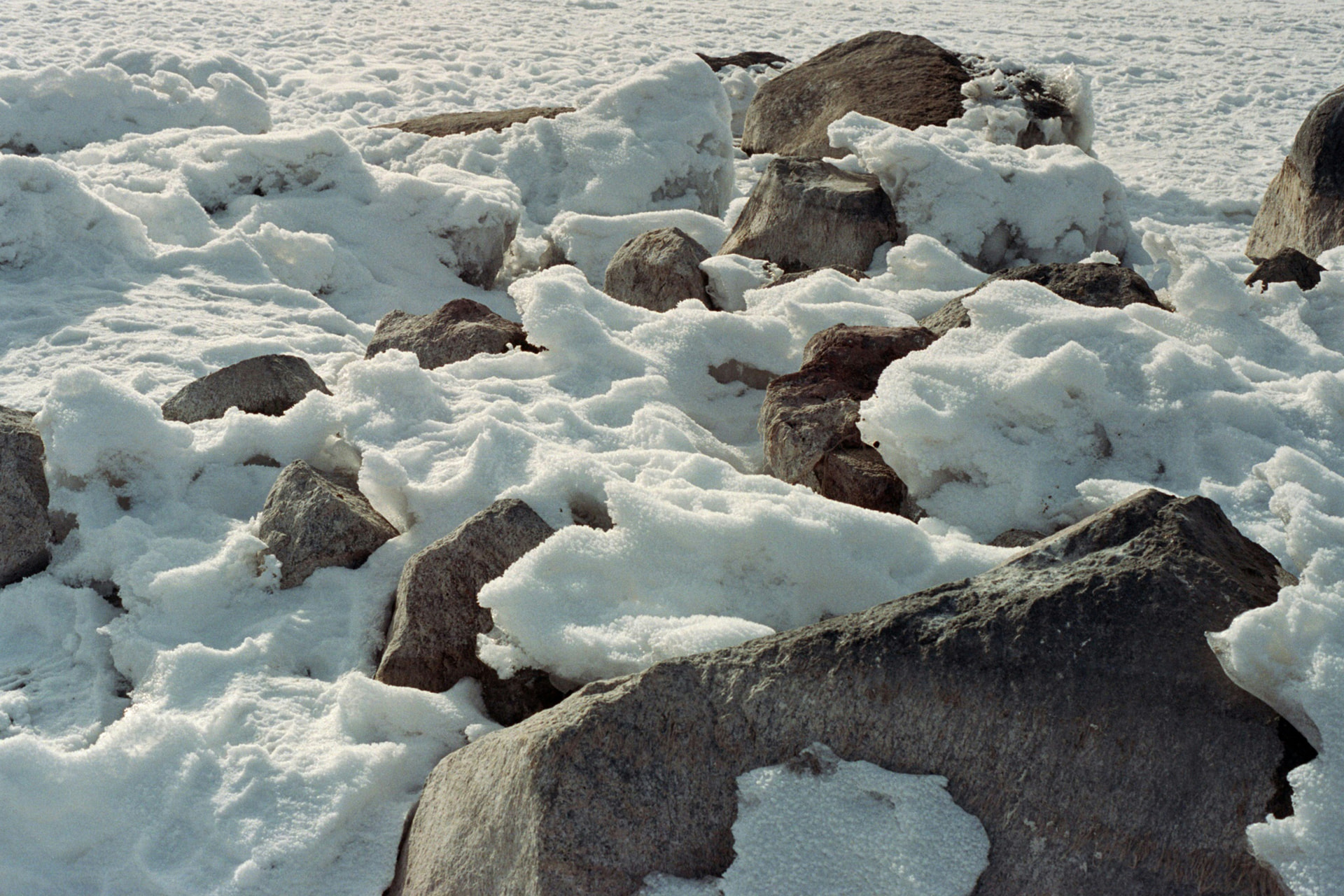
Photo by Hakam magdea fardana ansie on Unsplash
Not much left of the book, and hard to see where it will end.
I thought that it was interesting that after all their efforts to retrieve the ‘sculptures’, our narrator and おじいさん seemed very hesitant to find out what was inside.
I was glad that they managed to safely retrieve all the hidden items, but curiously we hear nothing about what they are.
(I struggle to know just how many things there are. We heard that they are so many that they spill out across the floor in the hidden room, and they were a lot more than had been previously hidden in all the drawers of the タンス. Any thoughts? 30, 40, 50? more?)
There was a conversation between おじいさん and the narrator about uncovering lost memories that I found hard to follow.
「しかし、思い出す、っていうのは身体の中の、ここか、ここか、とにかく目に見えない場所でおこなわれることでございますよね」 おじいさんは頭のてっぺんと胸に手をやった。 「いくらすばらしいことを思い出しても、放っておいたら誰の目に触れることもなく、そのまま消えてしまいます。自分自身でさえ記憶の正体をつかんでおくことはできません。証拠が何も残らないんです。それでもやっぱり、あなたさまがおっしゃるとおり、消え去ったものたちを無理矢理でも引きずり出した方がよろしいのでしょうか」
This passage might be important. I think it is about the ineffability and insubstantiality of memory.
In the second part of the conversation, they return to a recurrent image that appears in their conversations with R氏 - the idea of memories buried at the bottom of a swamp. Interestingly, R suggests that the hidden room is the bottom of the swamp. Obviously, in one sense this place is the location of the physical forms of some of the vanished things, preserved from the process in the outside world that would lead them to disintegrate and disappear. (The hidden room is both literally the last place on the island for these items, and also maybe the place where they will be able to (?) resurrect their memories).
We have one light moment in the middle of the chapter. I always enjoy the bits with the dog, especially when the narrator interprets his commentary. I loved the image of him regretting having to get down from the examination bench because he was enjoying all the attention. (Reminds me of my own dog).
And then we have the final scene. It was filled with a kind of bittersweet foreboding. I was worried about what might lie ahead for our lovely, caring, unfailingly polite, ever-resourceful おじいさん. And from the last cliffhanger sentence, it seems that I was right to worry…
Let me try to give you a translation:
“However, the thing called “to recall” - is in the body, maybe here? or here? - at any rate, it is done in an invisible place”, said Grandpa, placing his hand on the top of his head and on his chest. “Whatever great thing one remembers, once it is let go, nobody can see it any more, and it disappears on the spot. Even I myself cannot grasp the true shape of my memories. There is no proof of them left behind. But frankly, just like you both said, those things that are deleted and gone, is it really better to pull them out forcefully?”
is what I would put it at. Let me know if this helps or if there are more questions left 
Welcome to Week 18!
| Week | Start Date | Chapter | Page Count |
|---|---|---|---|
| Week 18 | Jan 31 | Chapter 25 | 19 |
Mark your participation status by voting in this poll.
(Please feel free to update your status whenever you like!)
I will dedicate more time this week to catching up. We’re almost at the end of the schedule!
I am curious about the difference between 本、小説、 and 物語 in terms of being disappeared. They burned all books on the island, I would imagine regardless of if they were fact or fiction, implying 本. She can’t remember her story and can’t write to continue it, implying 本 or 小説. If she no longer writes, but were to to tell the tale to R and he write it, would it work? Reminds me a a bit about the discussions I sometimes see about if listening to audiobooks counts as “reading.”
The short and dark exchange they had about R reminded me quite a lot of the last we saw of the typist narrator, who seemed to have become unable to understand the language of outside the room she’s trapped in, and wondered if she would be able to survive in the outside world again even if she did escape. I wonder if R is thinking about this, too. Is it his story that he wants her to complete? (I doubt that would be a main motivator by any means, but it may have a bit of influence nonetheless). I do like the image of sinking to the bottom of the sea here; it contrasts well with the bottom of the swamp she uses when she’s trying to retrieve a disappeared memory, though I can’t exactly call it a hopeful image.
I hope the trapdoor is fixable. Surely after a disaster like that, them doing some carpentry/repairwork won’t be anything out of the ordinary, though if there were to be inspections / “support” from the Memory Police, this would be very bad timing.
Speaking of which, everyone in the Memory Police must be able to remember disappeared objects, right? In order to identify if someone is hiding something that has been disappeared. There’s also never any mention of recruiting, or information on where these people came from or how they came to be.
Welcome to our final week, Week 19! 
| Week | Start Date | Chapter | Page Count |
|---|---|---|---|
| Week 19 | Feb 07 | Chapter 26+27+28 | 31 |
Mark your participation status by voting in this poll.
(Please feel free to update your status whenever you like!)
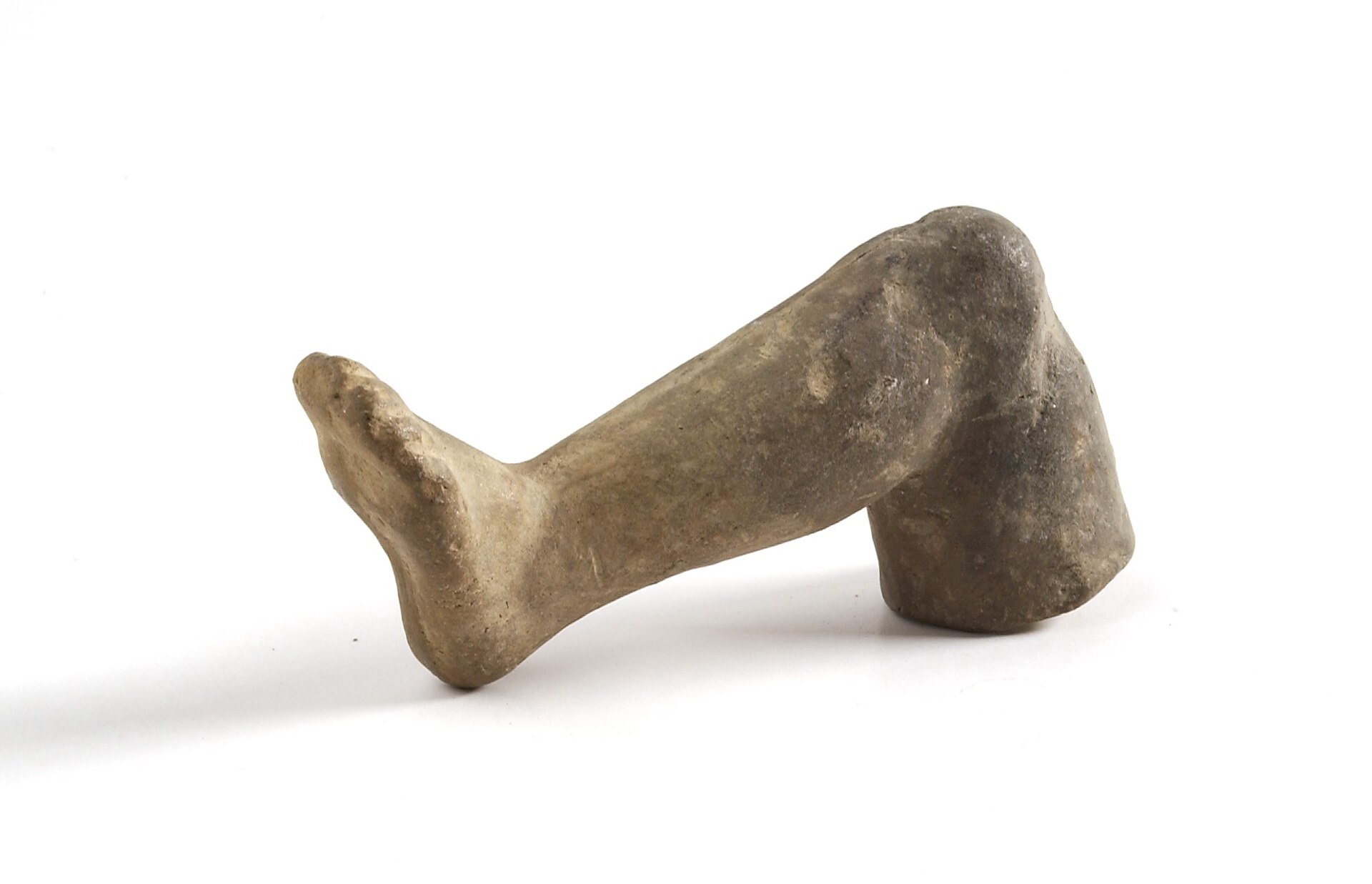
Image from Wikimedia
Disappeared things
The end is close, and there are some dramatic developments
The start is the confirmation of what had been hinted at for a couple of chapters and then unsubtly foreshadowed at the end of the previous chapter.
We the reader share something of the loss and destabilisation at the news of おじいさん’s sudden death. Although we never learned much about him, and never really had any insight into his internal world, he was a constant, reassuring, resilient presence. He was the one who made the secret room, and made R’s hiding possible. Whenever the narrator was fretting or fearful, he offered reassurance - they would get by (despite the disappearing food), they could cope (with yet another loss), they could resist (the secret police).
Obviously, there is only one chapter remaining [edit actually three chapters, but one week for us!] , but it seems hard to see how the status quo can continue for long now. As hard as the narrator is trying to keep the house going, this can’t be sustained?
There were some striking images in the writing in the first part of this chapter. The first of these is the image of the ground being replaced by cotton wool. That very clearly evokes the loss of solid ground provided by おじいさんs support and presence.
The other image was stranger and I’m not sure I understood it.
わたしとR氏を包んでいる世界の材質は、あまりにも違いすぎる。庭に転がっている石ころを、糊で折紙にくっつけようとしているようなものだ。
What is the image of a pebble being stuck (unsuccessful) to origami paper conveying here?
Next there is the first stirring in the deep pond. A couple of fragmentary sentences. Are these connected to the typist’s story? Are they a new story? Are they a story at all or just fleeting images.
It feels more positive that something might be returning for our narrator, but it isn’t much.
And then there is the disturbing final ‘disappearance’ of the islanders left legs. Of all the things disappeared so far, this seems most strange and obviously most threatening. The mental disintegration is becoming physical.
(Others may or may not be aware, but there is a rare neurological syndrome involving the perception that a body part is not one’s own. Asomatognosia does actually quite commonly affect the left side of the body (arm or leg). I wondered whether Ogawa had encountered it in reading or in the world, and then incorporated into the story. Obviously ‘collective’ instantaneous asomatognosia (even including dogs!) has no equivalent outside the world of the novel…
This might just be the most favourite sentence I have read this year!
It’s not “being stuck” but “about to stick the pebble to the paper”. (The “unsuccessful” nuance only goes along with the negative usage of this grammar point.) I checked back with my Japanese co-reader, and he said that it’s (obviously) quite difficult to glue a stone to a sheet of paper [or that the meaning is somewhat unclear: everybody understands “wrapping” but what does “glueing to” actually entail?], and the important part is the next sentence: If grandpa was still there, he would surely suggest to use this better glue so that we can successfully get the task done. But now that he is not there, we cannot get the task done, we feel that our world has changed extremely, that it feels like cotton wool, and feels unstable. That’s what this is meant to mean, according to him.
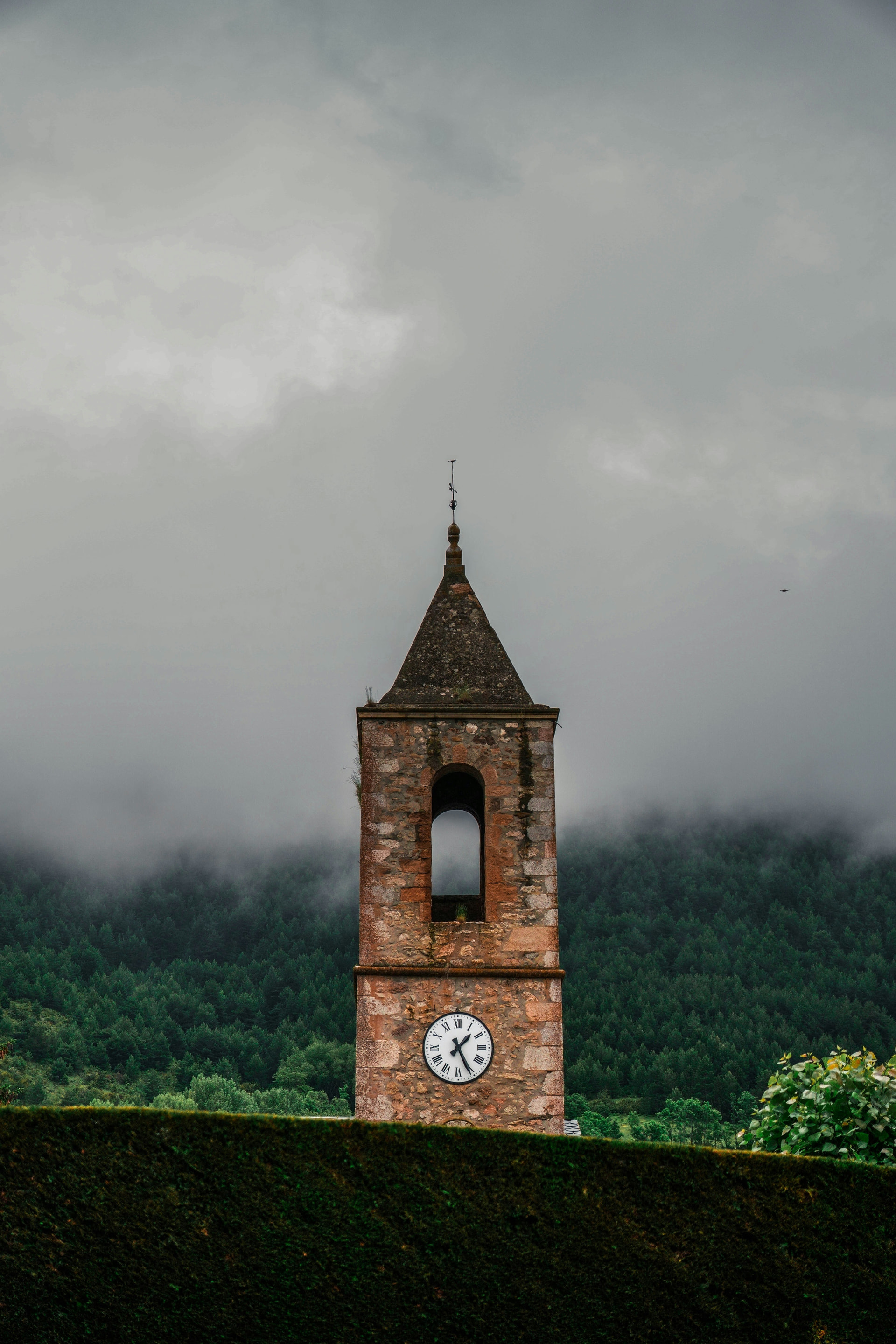
Photo by Will gonzalez on Unsplash
I haven’t read the final chapter yet, but the penultimate one…
What a chilling, unsettling climax for the Typist’s story. All the more striking for having been left dangling for quite some time, with the typist trapped in the room, and our narrator-writer trapped by the island’s amnesia, unable to complete her story.
The first thing that I was struck by was the connection between the end of chapter 25 and the start of 26.
Once again, the jump between external story and story-within-story occurs without warning or any sign. And here the ambiguous and vague boundary between the two comes into its own. I had just been reflecting that R’s gentle laying down of our nameless narrator on the bed in the secret room was eerily like the laying of the typist in the bed in the clocktower garret. And then the next chapter begins and it took me a couple of paragraphs to work out that we were back in the typist’s story.
We had just heard about R’s suggestion that the narrator should come and hide in the secret room, with him caring for her in her impaired, diminished, fragile state. And then we switch to the clocktower and the echos between the worlds become obvious.
It occurred to me (finally, belatedly) that another potential explanation for the title of the book lies in the typist’s story. We have never had any explicit suggestion, but I wonder if the title of the short story is “密やかな結晶”. The crystallisation then refers to the process that occurs to the typist, with her mutism and progressive transformation into a kind of silent rigid doll.
私はただもう身体を硬くしているだけでした
The Typist’s story proceeds to its end in devastating, inexorable degeneration. I (like one of the typist’s internal voices) was yelling at her to make a noise, attract attention, seek help from the invisible woman who visited the clocktower. But as we might have predicted, and the typing teacher certainly predicted, she was unable to do this. At the start of the chapter, we see the signs of her manifestations of Stockholm syndrome. But her lack of response to a potential rescue seems to represent a total submission and learned helplessness.
It was all the more distressing to discover that the teacher had been completely aware of the potential ‘rescue’, and had such faith in his power over the typist that he allowed it to occur.
Favourite image:
肋骨を氷の刷毛で撫でるような、ひややかな微笑みです。
The image here is just as chilling as the abuser’s facial expression…
One lighter moment: I enjoyed the lovely (slightly strange) addition of the disembodied sentences that had been the harbinger of the returning 小説
It is difficult not to interpret the end of this story as symptomatic of our narrator’s own sense of helplessness in the face of the island’s worsening state.
The key question for us readers as we move onto the last chapter - is it going to end just as bleakly and miserably [‘not with a bang, but with a whimper’ - like in TS Elliot’s The Hollow Men??]. Or is Ogawa going to leave us with at least some possible hope?
What do you think?
(It is interesting - I read the book some years ago in English, and I don’t remember this part of the book, and certainly don’t remember being as impressed by the cleverness of the way the stories connect. I suspect reading it slowly in Japanese it is more striking and impactful…)
The image that stuck out the most to me in this chapter:「もしかしたら、自然に取れるんじゃないだろうか。だんだんに朽ちていって、枯木が落ちるみたいに、ぽろり、と」Deeply unsettling. I can’t quite tell what they are experiencing with their left legs (is it numb? Paralyzed? Or simply there is a mental barrier preventing them from understanding that the leg is still part of them?) but it seems the Memory Police are unaffected as usual.
I wonder how R氏’s wife is doing. Taking care of a newborn when one of your legs has been disappeared seems extremely difficult.
I’m pretty sure that they were also afflicted. Though I think in the passage that described it, it seemed as if they were more quickly able to adjust to their “dead leg”
I think from the description, the lost limbs are numb and paralysed
Thank you! It seems I missed some of the details in that section.
Previously I had wondered if they were actually affected by the same memory loss, since in order to know if someone has kept a disappeared item they would have to be able to recognize it. Or perhaps they only need to know that they don’t recognize it, and that’s enough? They do remain a mystery…
I somehow deleted my comments for Chapters 26 + 27… I think I remembered most of what I had written.
Chapter 26
We see the continuance of the disappearance of their bodies. I liked the description of the adaptations the islanders made to fit the needs of their shrinking bodies, but in the end it’s only a delay of the inevitable. It occurred to me during this chapter while reading about the dog and how this phenomenon is also impacting him, did the same thing happen when birds were disappeared? Once released, they all left and didn’t come back. Did they perceive themselves as disappeared? Is that what will happen to the islanders as well?
Chapter 27
Though I had harbored a small hope that the typist would find a way to escape, the story had been set up in such a way where I couldn’t believe it would really happen. She stayed in the room, believing that she no longer has a place in the outside world, and continues to disappear. Right when she finally vanishes, her warden brings a new victim to the room, another typewriter to add to the pile. Do these women disappear from the memories of the rest of the people in the town? If he’s disappeared so many women, surely someone would have otherwise gotten suspicious. It’s scary how perfect his timing is, but then he’s had a lot of practice. I also thought that even if the typist had responded to the knocking of the new girl, that the warden would have found some way to thwart her escape. At that time, was the typist still visible to others? Or was she only visible to the warden, in the same way that her senses had dulled to the point of only being able to clearly perceive him? I wonder.
It was a perfect fit, that in the typist’s story the first thing to disappear was her voice, and in the main story it was the last. I really liked the image of the fear she had of being carried away by the wind as only a voice.
For much of the book I thought the Memory Police were unaffected by the island amnesia (thanks @domjcw for pointing out the detail I had missed). Now that I understand they were affected (which was mentioned in greater detail in this chapter) my opinion on the metaphor of this book has changed, and I think I do see it most as a book of dementia. With that perspective, I had likely made my peace with the ending before it arrived. Until the end, R never gave up on trying to bring back the main character’s memory and keep her in the same reality they had once shared; but once memory loss begins, there is only slowing it down left. It cannot be reversed.
If the Memory Police also suffer from memory loss the same as everyone else, they take on more of an “enforcer” role to me rather than the “sole perpetrator” role previously held. I’m not sure if either one is completely correct, but if the memory loss is not clearly orchestrated by a thinking force, some of the idiosyncracies (why were the birds able to move freely after being disappeared while dogs and humans were not? For what purpose were the Memory Police disappearing people if they were also affected?) are a bit more comprehensible. Or rather, I’m more understanding of those details being left to ambiguity.
The town is not repaired after the earthquake, and the main character finds herself feeling grateful that おじいさん hadn’t had to undergo any more loss and see the destruction she’s now living in; but then shortly after wonders if there’s any meaning to this thought/feeling if everything is going to be disappeared anyway. This line really stood out to me. The other line was 「声だったら、最後の最後の瞬間を静かに穏やかに迎えることができると思うの。痛みも苦しみもみじめさも残さないでね。」Because she had a voice until the end, she was able to communicate with the one she loved until the end. And R, who remembers everything, will hopefully tend the room which had been his shelter and became her grave.
Honestly, I was wondering if there would be anything for R like the typist had experienced (becoming absorbed by the room they were trapped in and unable/afraid to leave). But fortunately he was able to leave, and the one moment, one ray of light that pierced the room as he climbed up the ladder and left the room will probably stay with me for some time.
I put one of my old playlists on shuffle and forgot one my old favorite songs ( モノクロになった最期の日) ended with these final two lines. Rather a suitable match for this book
こんな雪が降る季節と記憶の中で
いつまでもいつまでも生きていくから
I just had this kind of flashback… maybe it’s already obvious to everybody and I’m simply being a bit behind? 
When our typist was still living in the outside world together with the teacher, didn’t she also go up the tower at some point? 


(I don’t mean the first passage of the book, when she climbed up the lighthouse with her brother or whatever that was)
I don’t think so, unless I missed it.
When she talks about meeting her lover in the clocktower (in chapter 6), she meets him in the classroom. She says that she has never been to the room at the top…
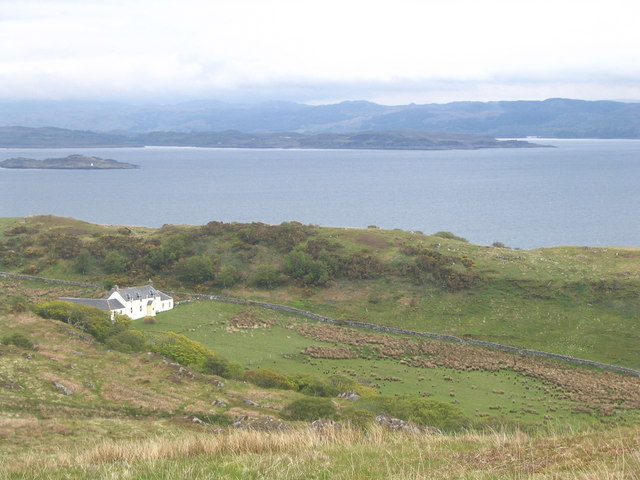
By Ken Craig, CC BY-SA 2.0, File:Barnhill (Cnoc an t-Sabhail) - geograph.org.uk - 451643.jpg - Wikimedia Commons
And so we reach the end.
After a long (for me) book, and quite a lot of build up, the conclusion when it came seemed to arrive very quickly.
For others in this club - how do you find Ogawa’s endings? It seems that she doesn’t tend to wrap up stories (whether the Housekeeper, or Mina, or short stories in Pregnancy diaries) in ways that others might expect. Often there is a lot of expert ratcheting up of tension, and then perhaps there is not a pay off or climax or neat conclusion that might be typical in Western novels.
I found myself wanting and expecting some escape from the apparently inevitable decline. Surely, I thought, the fact that the narrator had managed to re-find her story, perhaps that meant that she (and maybe others) could resist the island’s amnesia?
I had wondered whether R and the narrator would flee from the island, or maybe retreat to the country and wait out for the secret police to fall victim to the illness.
But none of that was to be.
Curiously, although I had remembered bits of the story from previously reading the book in English several years ago, I had no memory of the ending. Either I myself had managed to catch a part of the island’s memory loss. Or (more likely) that the understated, rapid fading out of the characters and story had simply left no lasting impression. I do wonder whether that effect might have been intended??
The ending of the main story ended up very closely parallel to the typist’s tale. (with, as @gen-shk observed, the clever inversion in the order of disappearance).
We are mostly deprived of hope in the ending. One echo that struck me as I approached the end of the book is the resonance with Orwell’s 1984. Others here will likely have read that book; I had always found the final scenes of that novel deeply depressing. Winston submitting totally to Big Brother. I did wonder about one tiny crumb left for the reader seeking a more redemptive message in the ending of 密やかな結晶. Our main character manages to complete her story, and R reassures her that that story (and hence a part of her) will live on, in his memory. That tiny act of resistance suggested to me firstly the idea that memories of us in the minds of family and friends are one way for us to live on, to continue, beyond our death. But also that the novelist (小川先生?) may have a particularly potent way to resist mortality by creating stories that can be retold, can be passed on to others even when they are no longer present.
(One last little echo to note for now. I discovered when I was thinking about what to write about this last chapter that George Orwell finished 1984 in the last year of his life while very unwell, suffering and wasting away from tuberculosis (sometimes called ‘consumption’). He completed the manuscript on the isolated island of Jura in the Hebrides.)
Personally, I like ambiguous endings much of the time when the scope of the story does not include a lot of external conflict. I think the only story of hers where I wish the ending had been more conclusive was in Dormitory, mainly due to the unknown whereabouts of the main character’s cousin (?) in line with the other boy in the dorm who disappeared. It leaves more up to the reader in deciding how the story ended (or will continue) which, while perhaps less satisfying, I find to be more engaging, but only as far as I’m willing to engage with it.
I specifically remembered the scene of R climbing up the ladder, but almost none of the other details from the final few chapters. But I definitely agree with what you said previously that this book had a much stronger impact reading in Japanese than I remember it making when I read it in English, due to the difference in the degree of focus as well as reading speed this time around. There was a lot to analyze! But then, I do tend to enjoy books more on the reread than I do the first time through.
As a general question for everyone, how often do you reread books? In any language (or across languages). I think probably somewhere between 60-70% of what I read in English is a reread, though I’m not rereading books in Japanese yet (there is one I probably will reread this summer).